A Timeslip story
The summer that never came, and the night Frankenstein began
Rain fell for about a hundred and thirty days in the spring and summer of 1816. The terrible weather kept five young people indoors in a rented house on Lake Geneva, resulting in two enduring works of fiction that would help shape modern horror. None of them knew the weather was the result of a mountain exploding twelve thousand kilometres away.


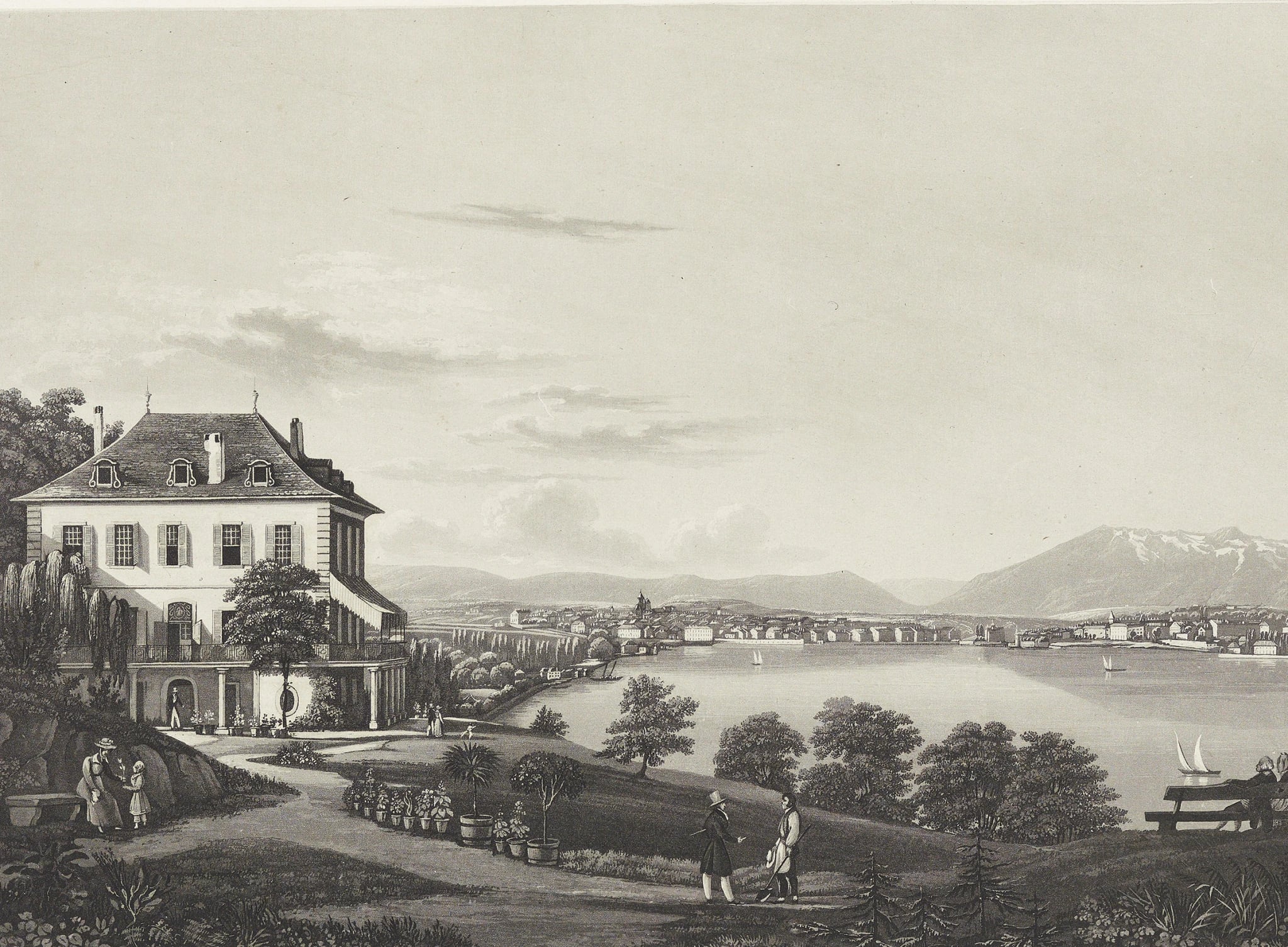
It was June 1816, and Lord Byron had rented a villa with a view over the lake. Rain had been falling almost continuously since April. Although it was summer, the fire was lit, the lake had risen until it flooded the streets of the city below and snow lay unmelted in the mountains.
Byron and his guests that summer were all escaping disgrace in some shape or form. Byron was twenty-eight and had left England in April, escaping debt collectors, a recent separation from his wife, Annabella Milbanke, and shocking rumours of incest, sodomy and domestic violence that had made him a social pariah. Percy Bysshe Shelley was twenty-three, had recently abandoned his wife, and was an atheist expelled from Oxford. Mary Godwin and her stepsister Claire Clairmont were eighteen, Claire pregnant by Byron. The fifth member of the party was John William Polidori, twenty, Byron's travelling physician.
To pass the time indoors, out of the dreary weather, they kept each other entertained by reading ghost stories aloud. And then Byron proposed that they each try writing one.
Two of these stories are still in print today. Nobody at the time understood that the reason summer had been cancelled was ash from a volcano in Indonesia.
Why 1816 was the year without a summer
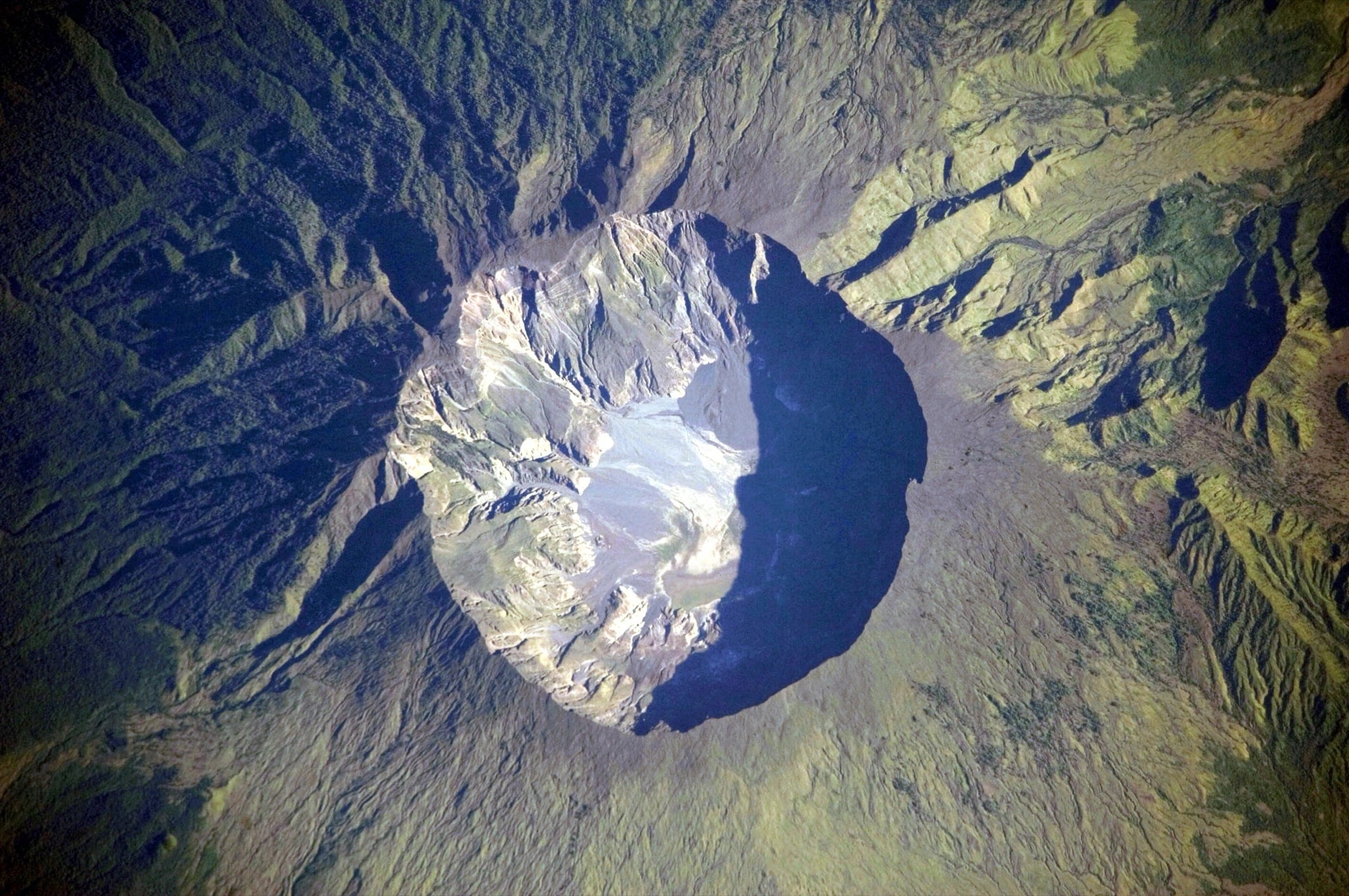
Fourteen months earlier and twelve thousand kilometres away, Mount Tambora on the island of Sumbawa in the Dutch East Indies (Indonesia) had started erupting. The climactic eruption began around seven in the evening on 10 April 1815 and threw a column of ash forty-three kilometres into the air. It has been rated seven on the volcanic explosivity index, making it the largest eruption in recorded history. It was also one of the loudest: the explosion carried 2,600 kilometres to Sumatra, where it was mistaken for the sound of guns.
The mountain lost about a third of its height. Ten or eleven thousand people died in the eruption itself, and between seventy and a hundred and twenty thousand across Sumbawa, Lombok and Bali in the starvation and disease that followed.
Europe was affected by sulphur dioxide, which forms a fine sulphate haze that circles the planet, scatters sunlight back into space and lingers for years. This caused temperatures to fall by somewhere between 0.4 and 0.7 °C, making it the coldest summer on record between 1766 and 2000, and leading to crop failures and famine. At the time, people blamed the bad weather on sunspots. The volcanic haze meant they could look at the sun directly without hurting their eyes and, to their great alarm, see sunspots, which they believed to be a symptom of the sun dying and the world ending.
What happened at the Villa Diodati in June 1816
Much of what we know about these events comes from Polidori, who had been offered five hundred pounds by the publisher John Murray for an account of the tour, which is why we have two diary entries recording the evenings of 15 and 16 June 1816.
Byron arrived at Geneva at the end of May and signed for Villa Diodati at Cologny on 10 June, keeping it until 1 November. It was a square, arcaded house on a slope a couple of kilometres outside the city, with the water below it. The Shelleys took a smaller house on the waterfront and walked up the hill in the evenings.
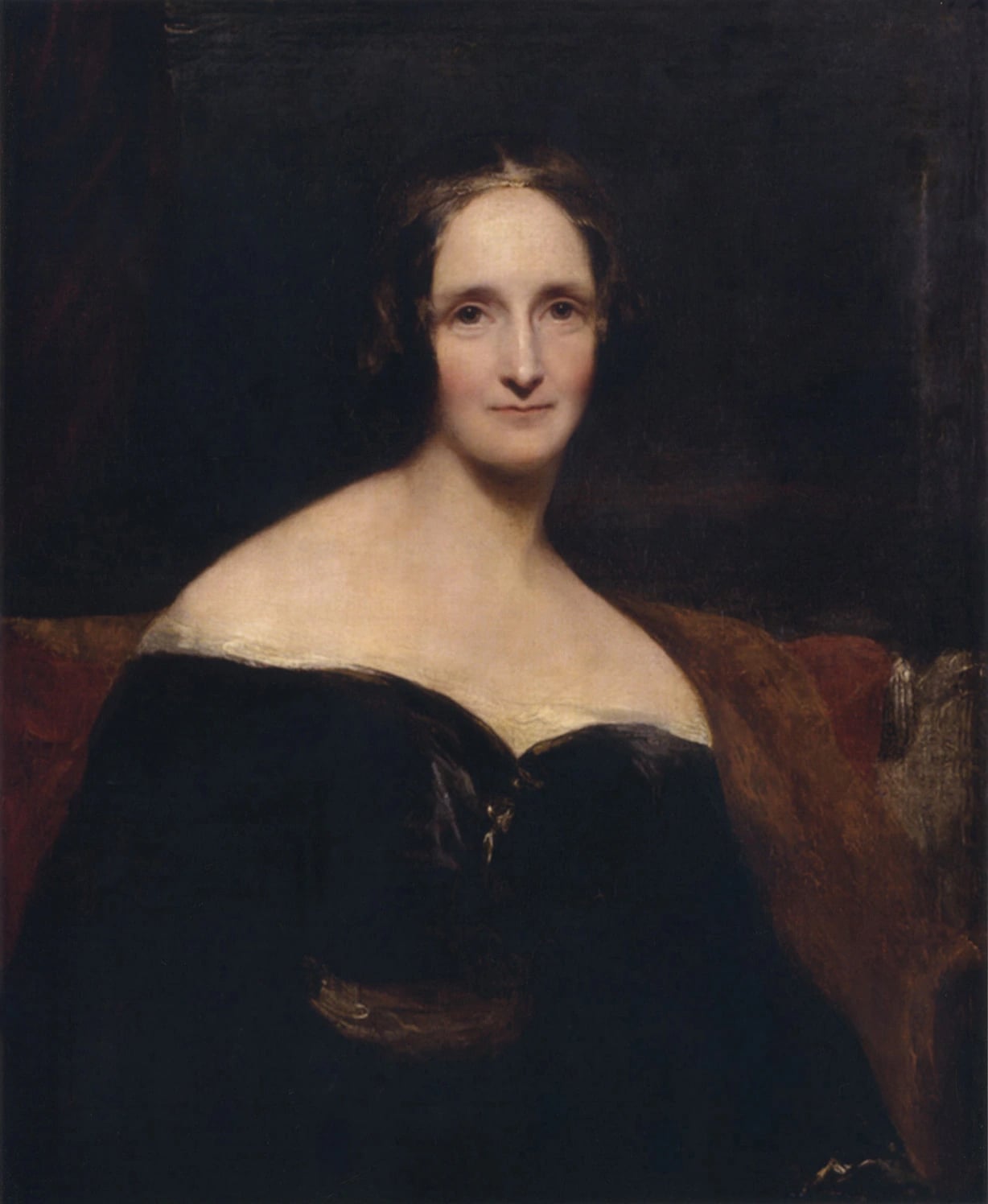
Mary Godwin was the daughter of the philosopher William Godwin and the pioneering feminist Mary Wollstonecraft, who died eleven days after giving birth to her. She went on to marry Shelley that December, just three weeks after his wife, Harriet, was found drowned in the Serpentine. Mary Shelley is how we know her today.
Their ghostly evening reading was Fantasmagoriana, a French translation of German ghost tales full of revenants and family curses. Polidori's diary entries record that he and Shelley sat up talking about principles, and whether man was to be thought merely an instrument. On other evenings the talk turned to galvanism, and whether the spark of life might be a physical thing that could be supplied.
Then Byron made his proposal. Polidori writes simply that "The ghost-stories are begun by all but me."
How Mary Shelley came to write Frankenstein
The competition did not go well. Byron wrote a fragment about a traveller named Augustus Darvell who dies in a Turkish graveyard and does not stay dead, but discarded it within days. Shelley began a story inspired by his own early life but gave it up. Polidori had an idea for a skull-headed lady punished for peeping through a keyhole, but was unable to develop it. Claire Clairmont did not write anything.
Mary Godwin struggled for a story. Later she wrote that she was asked every morning whether she had thought of anything, and every morning she had to reply with a mortifying negative.
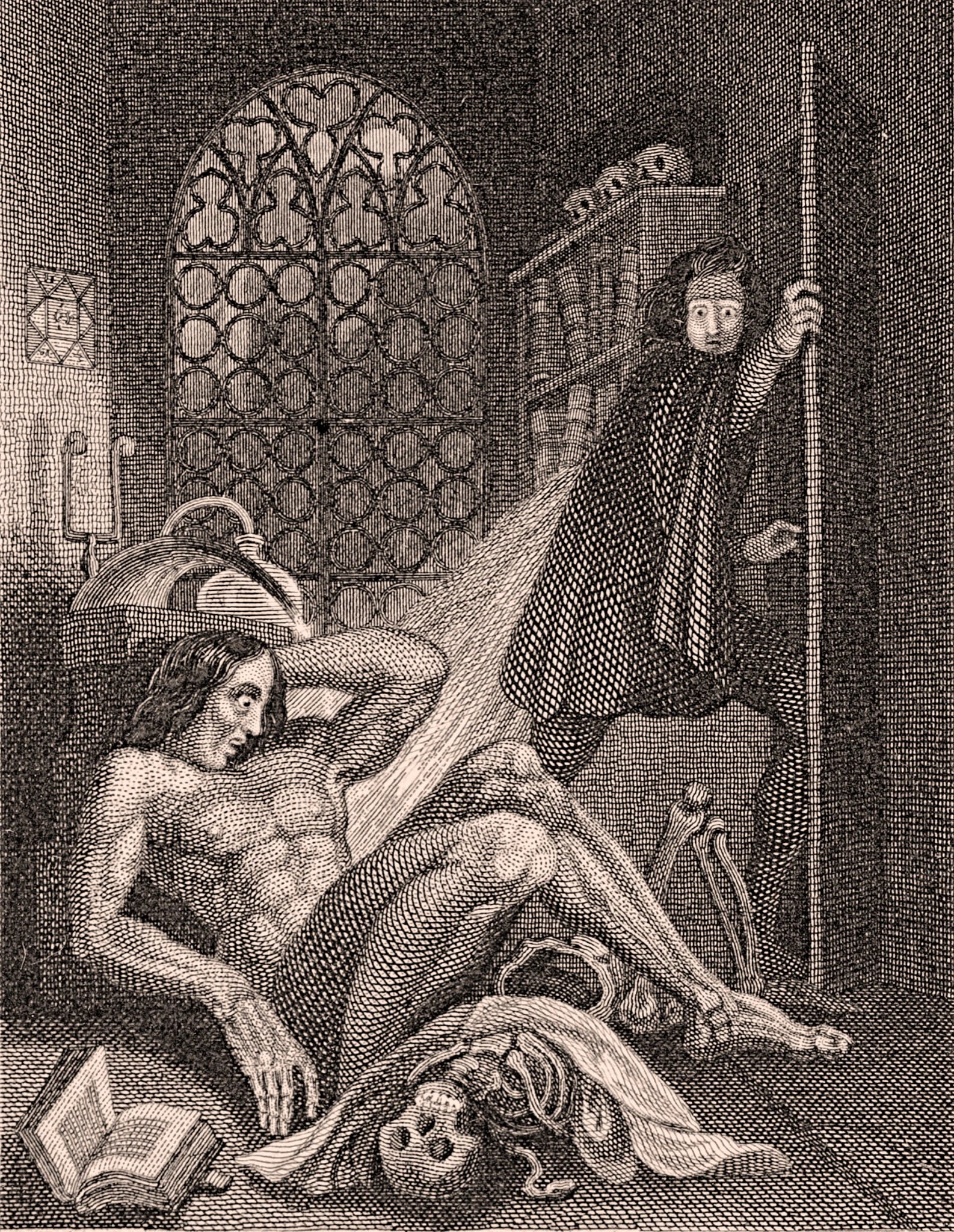
But then, in the small hours one morning, she had a waking dream of a pale student of unhallowed arts kneeling beside the thing he had put together.
I saw the hideous phantasm of a man stretched out, and then, on the working of some powerful engine, show signs of life.
Mary Shelley, in her introduction to the 1831 edition of Frankenstein
Some people felt this origin story was all too tidy, and doubted whether it was true — especially since it was written down fifteen years later, in an introduction to a new edition. But in 2011, the astronomer Donald Olson took a team to Cologny, measured the ridgeline behind the villa and, working through contemporary weather records, calculated the moon's position for every night of June 1816. The results showed that a bright gibbous moon cleared the hill and came through Mary's window just before two in the morning on 16 June, exactly as she had described.
Over the following year, the ghost story grew into a novel: Frankenstein; or, The Modern Prometheus. It was published anonymously in London on 1 January 1818, with a preface by Percy Shelley, leading early readers to assume he had written it. Mary Shelley's name did not go on the title page until 11 August 1823, when a second edition appeared following Richard Brinsley Peake's stage version, Presumption; or, The Fate of Frankenstein — a production that ran thirty-seven times at the English Opera House that season. She attended on 29 August and wrote afterwards, "But lo and behold! I found myself famous!"
How The Vampyre led to Dracula
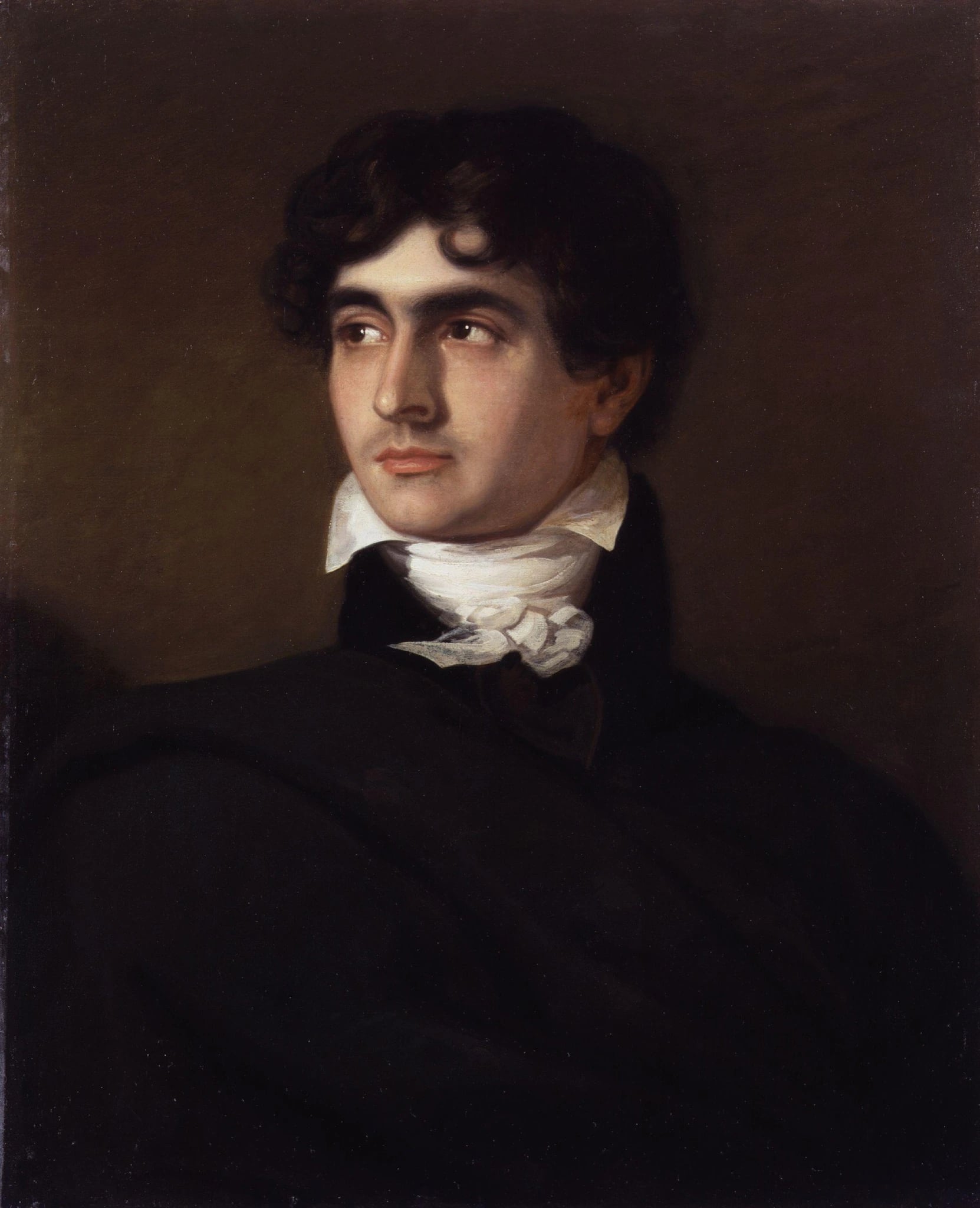
Polidori took up the fragment Byron had thrown away and ran with it. He turned Darvell into Lord Ruthven, a pale, magnetic aristocrat who moved through London drawing rooms destroying the people who trusted him. The Vampyre appeared in the New Monthly Magazine in April 1819, published by an editor who decided to credit it to Byron to boost sales. It became an instant hit.
Until this point, vampires had been Balkan peasant revenants. Polidori's twist — the vampire in the drawing rooms of society — captured the imagination of the age and shaped the genre for decades, reaching Bram Stoker's Dracula seventy-eight years later.
What the year without a summer did to the rest of the world
Switzerland felt the worst of it, suffering failed harvests in 1816 and 1817, which brought famine. But across Europe the death rate was more than fifty percent above its already high level in the war year of 1815. A typhus epidemic that spread from Ireland through Scotland, Switzerland and Italy killed more than sixty-five thousand people.
Crop failures everywhere sent bread prices spiralling, and rioting quickly followed. In England, armed labourers marched on the cathedral town of Ely and fought the militia; ten thousand people demonstrated at Manchester in March 1817. In the punishments that followed, rioters were hanged or transported.
North America saw snow in June across Albany, New York, and at Dennysville, Maine, while heavy frost visited Cape May in New Jersey and kept lakes and rivers frozen in north-western Pennsylvania through July. The unseasonable cold cost Vermont between ten and fifteen thousand people to westward migration in two years.
In Asia, the monsoon failed. China too saw summer snow in Jiangxi and Anhui. The Yangtze valley flooded, and famine in Yunnan pushed farmers toward the one crop that still paid: opium. In Bengal, a late monsoon was followed by torrential rain, creating the conditions for the cholera strain that broke out in 1817 and became the first of the great global pandemics of the disease.
The topsy-turvy climate had other consequences. A dire shortage of oats across southern Germany meant horses were slaughtered or starved, and quickly became a luxury. On 12 June 1817, a civil servant in Mannheim called Karl Drais rode out seven kilometres on a two-wheeled steerable machine — the first bicycle.
What happened to the people at the Villa Diodati
The group dispersed in the autumn of 1816 and went on to wildly different, dramatic futures. Polidori, dismissed by Byron that September, died in London on 24 August 1821 from self-administered prussic acid, aged twenty-five, though the coroner recorded natural causes.
Percy Shelley drowned off the Italian coast on 8 July 1822, a month short of his thirtieth birthday.
Byron went off to fight in the Greek War of Independence and died of fever at Missolonghi on 19 April 1824, aged thirty-six.
Allegra, Claire's daughter by him, died at Bagnacavallo in 1822, aged five.
Mary Shelley made it to fifty-three. She wrote five more novels, among them The Last Man, an account of a plague that empties the world. She struggled with illness in her final years and died from a suspected brain tumour.
Claire Clairmont, the youngest of the group, remained in contact with Mary Shelley until Shelley's death. Clairmont travelled around the continent working as a governess, housekeeper, companion and music teacher. She died in Florence at the age of eighty.
Mount Tambora is still active. A small eruption occurred inside the caldera around 1880, with further minor activity in 1967 and renewed seismic unrest in 2011. In March 2026, Indonesia's volcanology directorate raised the alert level to 2 when deep earthquakes beneath the mountain indicated magma was stirring again.
The house at Cologny still stands, now divided into apartments.
Sources
- Year Without a Summer — Wikipedia — the global weather record for 1816, the 0.4–0.7 °C drop and the coldest European summer between 1766 and 2000, the sunspots contemporaries blamed and could see through the haze, the New England frost calendar, the European famine, riot and typhus figures, and the downstream consequences from Drais to the Vermont migration
- 1815 eruption of Mount Tambora — Wikipedia — the eruption dates and phases, the explosivity index and ejecta volume, the detonations heard on Sumatra, the caldera dimensions, the loss of summit height and the death tolls
- Mount Tambora — Wikipedia — the sounds mistaken for gunfire, the eruptions since 1815, and the mountain's current alert level
- Gillen D'Arcy Wood, "1816, The Year Without a Summer" — BRANCH — the hundred and thirty days of rain at Lake Geneva, the flooding of Geneva, continental Europe's last famine and the 1817 mortality figures, and the reading of Frankenstein and "Darkness" as climate texts
- Tambora and the "Year Without a Summer" of 1816 — Swiss Academies of Arts and Sciences — the eruption's link to the last famine in Switzerland
- Mount Tambora and the Year Without a Summer — UCAR Center for Science Education — the stratospheric sulphate mechanism written for a general reader, and the horse-and-oats account of Karl Drais's machine
- 1816: The Year Without Summer — US National Park Service — the American impact, frost by state and month, and the collapse of the grain and oat harvests into famine
- The Year without a Summer: How Europe descended into Climate Chaos — Deutsches Historisches Museum — grain prices, looting, and the emigration out of Baden and Württemberg
- Villa Diodati — Wikipedia — Byron's tenancy dates of 10 June to 1 November 1816, the Maison Chapuis arrangement below it, and the reading of Fantasmagoriana
- The Diary of Dr John William Polidori — Project Gutenberg — the contemporary record of those weeks, including Murray's five hundred pounds, the 15 June conversation on principles, and the 17 June note that the stories had begun
- Mary Shelley's 1831 introduction to Frankenstein — Project Gutenberg — her own account of the wet ungenial summer, the question asked each morning, the waking dream, and the "there were four of us" that leaves Claire Clairmont out
- Frankenstein moon: astronomer pinpoints the hour of Mary Shelley's waking dream — Space.com on Donald Olson's 2011 finding — the forensic-astronomy reconstruction placing a gibbous moon in her window just before two in the morning on 16 June 1816
- Frankenstein — Wikipedia — the anonymous three-volume first edition of 1 January 1818, and the Whittaker second edition of 11 August 1823 that followed Peake's stage version and first carried Mary Shelley's name
- Mary Shelley — Wikipedia — her parentage, Harriet Shelley's drowning in the Serpentine, the marriage that December, and the life and the later novels after Percy's death
- John William Polidori — Wikipedia — his diary for June 1816, the composition and misattribution of The Vampyre, and his death in 1821
- Polidori, The Vampyre; a Tale — Project Gutenberg — the complete text of the story that gave English fiction its aristocratic vampire
- Claire Clairmont — Wikipedia — her dates, Allegra's short life at Bagnacavallo, and how long she outlived the rest of the circle
- Byron, "Darkness" — Wikisource — the full poem, with the editorial note placing its composition at Diodati in July 1816
- The Shelley-Godwin Archive: Frankenstein — Mary Shelley's 1816–17 draft notebooks, digitised from the Bodleian, showing the novel in her own hand


