A Timeslip story
The 1812 Overture was first played without a single cannon
The cannon are the only thing most people know about the piece, and they were not in the room. Neither was the cathedral, neither was the tent, and the composer had spent a fortnight trying to arrange not to be there at all.


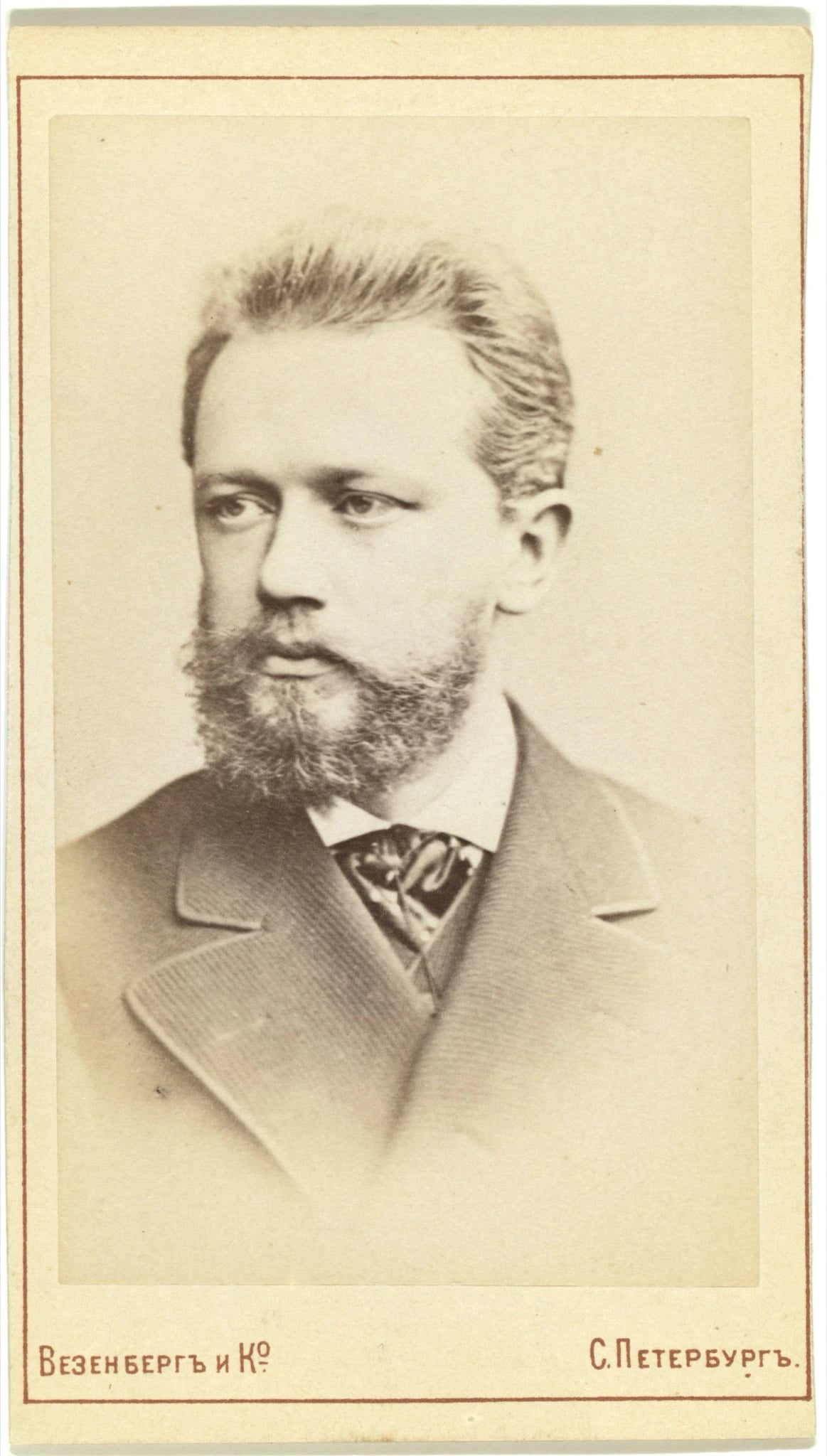
The cannon are written into the score. Orchestras that can lay hands on the real thing fire them over rivers and parade grounds every summer, and for most listeners that is the whole of what the 1812 Overture is. At its first official performance there were none. No bells either. There was an orchestra on a platform in a wooden hall, an audience who had bought tickets to a trade fair, and the composer somewhere in the seats hoping not to be recognised.
The hall stood on Khodynka Field, a flat expanse of parade and racing ground beyond the northwestern edge of Moscow, put up a few months earlier to entertain visitors to an industrial exhibition. It seated 2,150 people. On 20 August 1882 — 8 August by the Russian calendar still in use there — Ippolit Al'tani conducted an all-Tchaikovsky programme in it, and the new overture was one of the items.
Almost everything else commonly said about that first performance is wrong, and the wrongness is more interesting than the correction. English Wikipedia will tell you the piece was premiered in a tent beside the unfinished Cathedral of Christ the Saviour. The Russian article says it was played inside that cathedral. Grove Music Online offers a third version, with the bells of the Kremlin's Dormition Cathedral. The cathedral was seven kilometres away and had nothing to do with the occasion.
Where the 1812 Overture was first performed
On a field, at a trade fair, in a building that no longer exists. Through the summer of 1882 Khodynka Field carried the XV All-Russia Artistic and Industrial Exhibition: thirty hectares of it, opened on 20 May, running 131 days and drawing 1,077,320 visitors through the gates.
Alexander Weber and Alexander Kaminsky laid out the main building as eight three-nave pavilions radiating in a star, joined by two concentric galleries. The frames were iron and the roofs glass, in direct descent from the Crystal Palace. The decoration on top of that engineering was emphatically Russian: painted ochre and cream arcade fronts, big arched glazed gables, small pavilions with tent roofs and kokoshnik gables, the national tricolour on staffs along the rooflines.
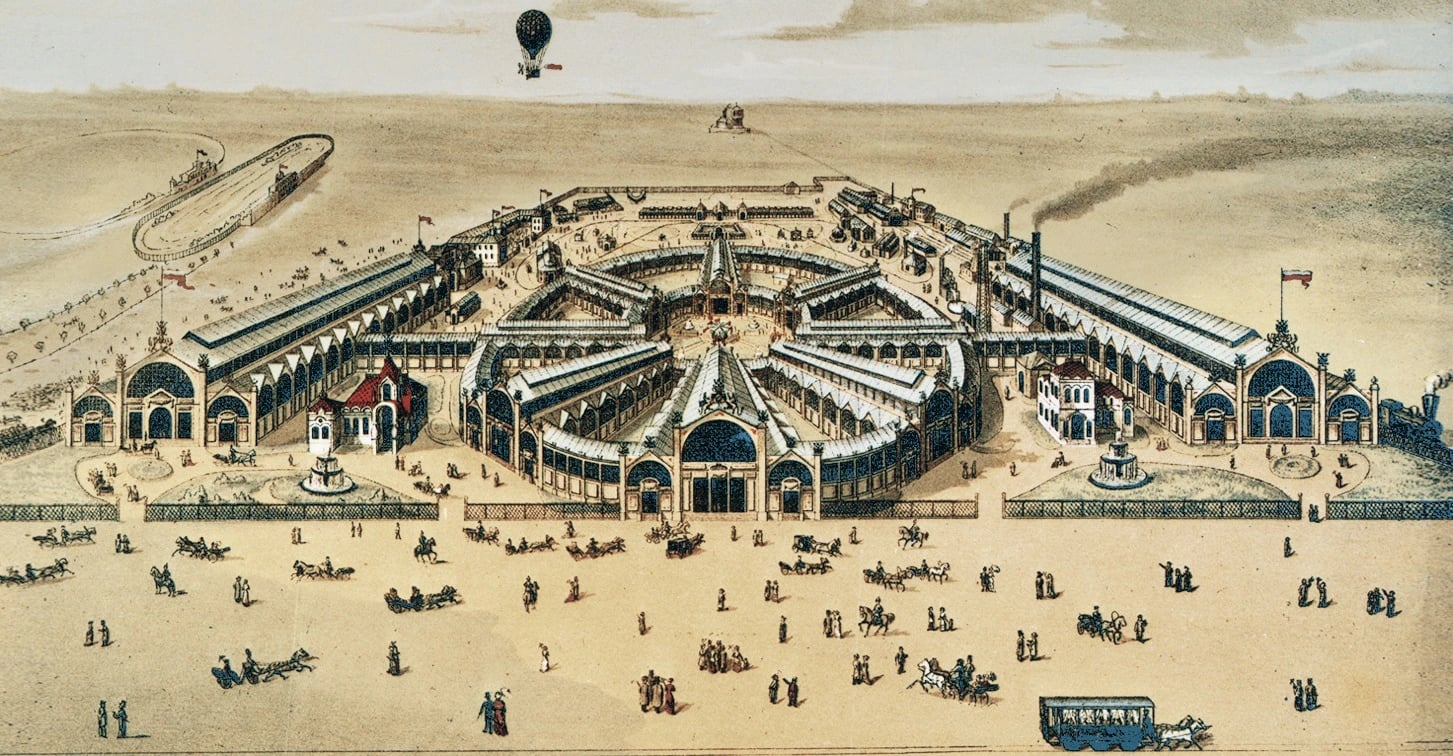
Among the auxiliary buildings, alongside a restaurant, a tavern, an administration pavilion and a fire station, was a concert hall seating 2,150. There was also a three-hundred-metre electric railway by Siemens & Halske, carrying up to eight hundred passengers a day — a technology three years old that summer, and to a good many of the men arguing about it still a conjuring trick.
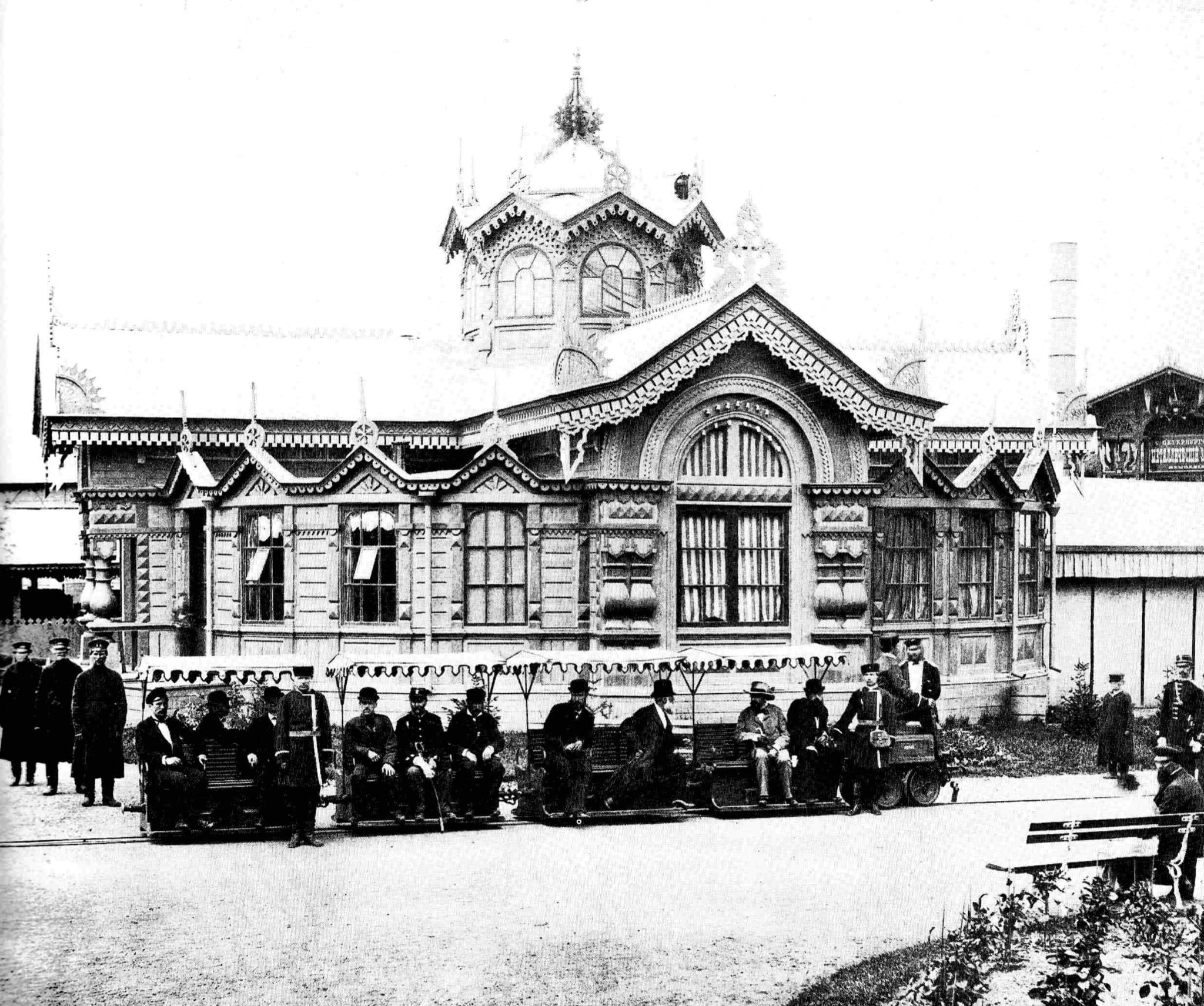
The overture was played in that hall, at the sixth symphonic concert of the exhibition's own series. Official is doing real work in the phrase official premiere: two performances had already slipped ahead of it unremarked, at Ozerki on 20 July under V. Kozel and at Pavlovsk on 12 August under Vojtěch Hlaváč.
Why Tchaikovsky wrote the 1812 Overture
Because he was asked twice, and gave in the second time. In May 1880 the publisher Pyotr Jurgenson wrote with a proposition: Nikolai Rubinstein — pianist, conductor, founder of the Moscow Conservatory and by then head of the exhibition's music section — wanted a piece, and three subjects were on offer. The opening of the exhibition, the twenty-fifth anniversary of Alexander II's coronation, or the consecration of the Cathedral of Christ the Saviour.
Tchaikovsky was not interested. "I won't lift a single finger," he wrote in June, "until something is commissioned from me." By late September he was blunter: nothing, he said, was more antipathetic to him than composing for the sake of some festivities. Then Rubinstein wrote personally, asking for a piece in any form, fifteen to twenty-five minutes long, delivered between December and January. He wrote it quickly and without pleasure, and finished the manuscript on 19 November 1880.
The Overture will be very loud and noisy — but I wrote it without any warm and loving feelings.
Pyotr Ilyich Tchaikovsky, 10/22 October 1880, a month before he finished it
The war he was writing about was seventy years behind him. In 1812 Napoleon's Grande Armée had crossed into Russia, fought its way to Moscow and entered a city already burning; the retreat that followed destroyed the army. That December Alexander I signed a manifesto promising a cathedral in thanks for Russia's deliverance, and the building took the rest of the century. When the overture reached print, its first editions carried a subtitle: Festival overture for large orchestra, composed for the occasion of the consecration of the Church of the Saviour.
That subtitle is the root of everything that went wrong with the story afterwards. Composed for slid, in one retelling after another, into performed at.
Were cannons fired at the 1812 Overture premiere
No. Not one, and no bells rung either.
The score does ask for them, and asked for them from the start; they are the reason the piece has the reputation it has. But a score is a set of instructions, and instructions are not events. In a wooden hall on a fairground there were neither cannon nor bells, which leaves the single most famous fact about the 1812 Overture absent from its own first performance.
Where the story about the tent came from
From one page of one book, as far as it can be traced. English Wikipedia's claim that the overture was performed in a tent next to the unfinished cathedral, and its account of the grander scheme that supposedly fell through — a brass band reinforcing the orchestra, the bells of Moscow pealing on cue, cannon fired from an electric switch panel for precision — rest on the same footnote: page 54 of Daniel Felsenfeld's Tchaikovsky: A Listener's Guide, a popular listening guide published in 2006. That is one popular secondary source, uncorroborated by the specialist literature. The Russian article's rival claim, that the piece was played inside the cathedral, cites The Great Song Thesaurus, a reference book about songs.
Set against it is the composer's own correspondence, the Russian State Institute for Art Studies encyclopaedia, and the specialist resource Tchaikovsky Research, all of which name the exhibition hall. Writing to Sergey Taneyev from Kamenka on 9 August 1882, Tchaikovsky mentioned that "a concert made up solely of my works is scheduled for 8th August, and among these, apart from Brodsky with the Violin Concerto, the overture which I wrote for the Exhibition is to be performed." He was dreading it: two or three hours in which sounds of his making were to pour forth in abundance, and he wished he could be there without being noticed by anyone.
There are physical objections as well. A two-to-three-hour symphonic programme with a violin concerto, an orchestral capriccio, a soprano and a tenor is not staged in a marquee on a building site. A piece quoting La Marseillaise could not have been played inside an unconsecrated Orthodox cathedral. And the cathedral was not a building site: Konstantin Thon's scaffolding had come down in 1860, and unfinished meant unconsecrated, with two more decades of interior work still going on seven kilometres from where the audience sat.
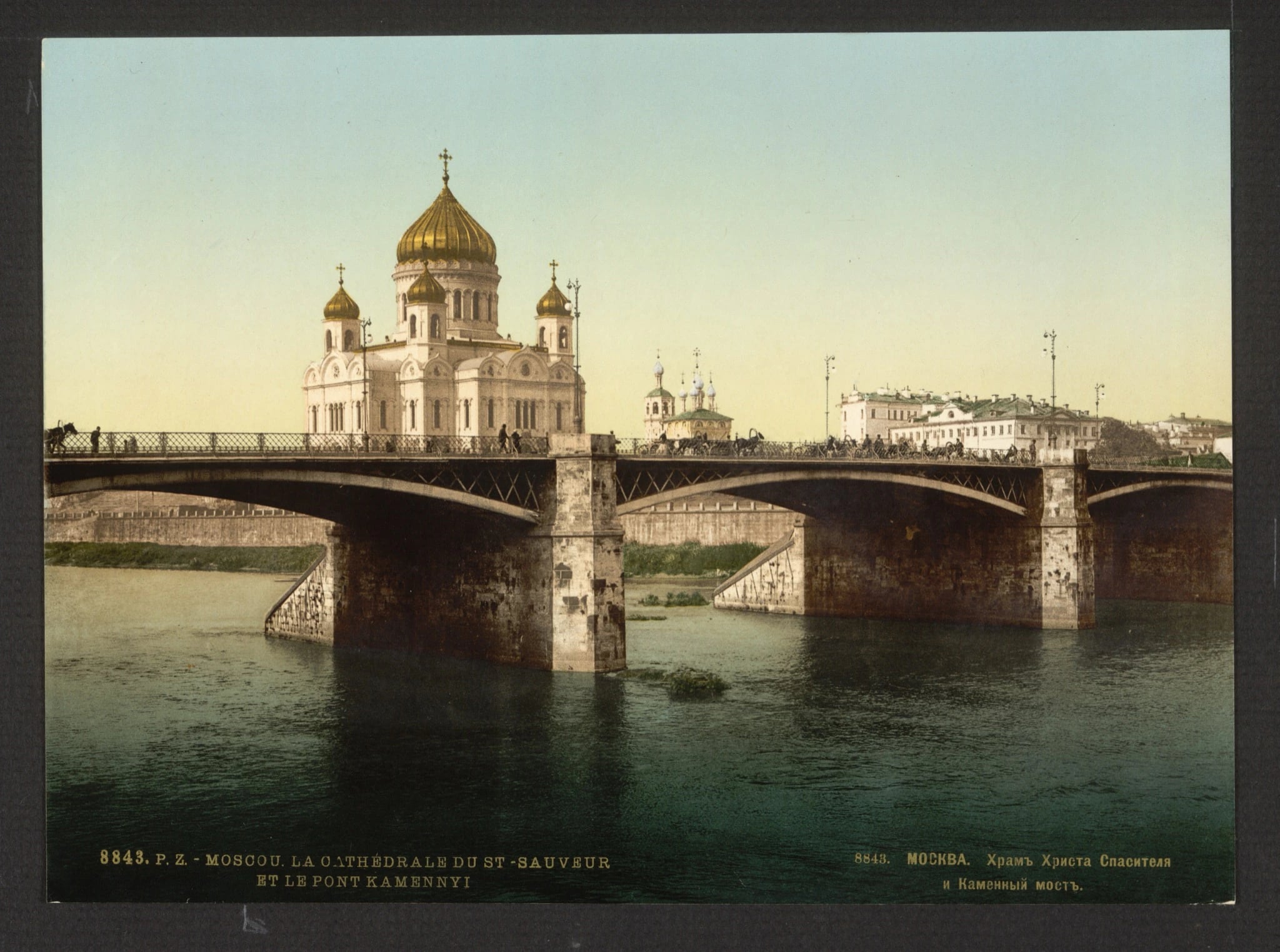
What is documented is narrower, and explains the confusion on its own: the consecration was one of the three subjects Rubinstein offered, and the subtitle naming it went out on the printed score.
What else was played at the 1812 Overture premiere
The whole programme was Tchaikovsky: The Tempest, the Violin Concerto, the Italian Capriccio, the new overture, two of Lel's songs from The Snow Maiden sung by Anna Ryndina, and two romances sung by Dmitry Usatov. Al'tani conducted.
The overture was not even the best story on the bill. The Violin Concerto had been written in 1878 and declared unplayable: Leopold Auer, who was to have given the premiere, refused it, and so did everyone else. Adolph Brodsky finally took it to Vienna in December 1881, where the audience divided and the critics were hostile, Eduard Hanslick worst of all. Eight months later Brodsky played it on Khodynka Field, its first performance in Russia, and the record says it had exceptional success.
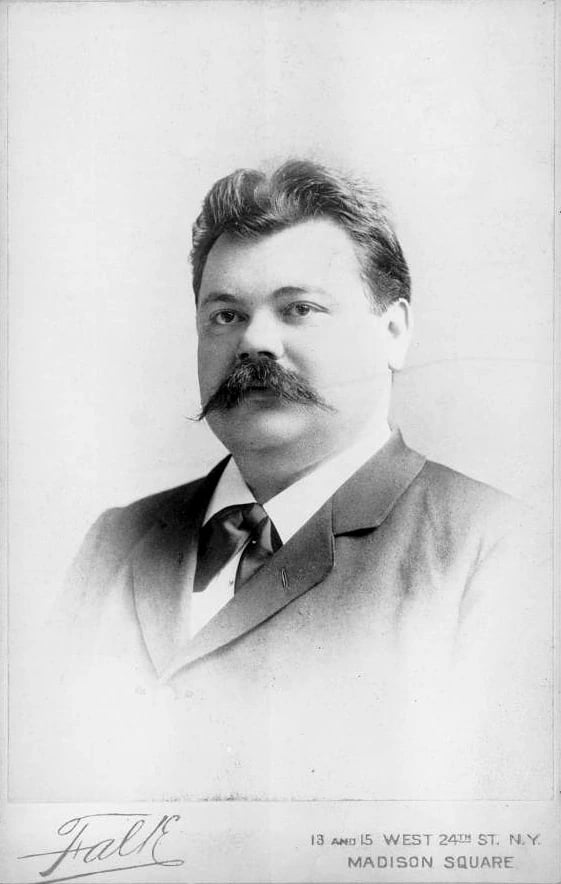
So the concert amounted to a programme of works their composer had been told, or had told himself, were failures. The audience liked all of it, and gave Tchaikovsky the ovation he had spent a fortnight trying to arrange not to be present for.
He does not seem to have enjoyed it much. Writing to Nadezhda von Meck from Moscow three days later, he said nothing whatever about the premiere. The letter is about her arthritic hand, his brother Anatoly's gastritis, and his own exhaustion.
The two men who might have made more of the occasion were both dead. Alexander II had been assassinated in March 1881; Nikolai Rubinstein, who commissioned the piece and was organising the exhibition's music, died of tuberculosis in Paris later the same month, aged forty-five.
What happened to the Cathedral of Christ the Saviour
It was consecrated on 26 May 1883, the day before Alexander III was crowned, its walls carrying over a thousand square metres of Carrara marble inscribed with the commanders, regiments and battles of 1812. It stood forty-eight years. In 1931 the Politburo ordered it destroyed, and on 5 December it was dynamited to clear ground for a Palace of the Soviets that was never built. The hole became an open-air swimming pool in 1958. The cathedral on the site today was built in the 1990s and consecrated on 19 August 2000.
Khodynka Field did not fare much better. Fourteen years later, at the festivities for Nicholas II's coronation in 1896, a rumour that the free gifts were running out sent a crowd estimated as high as half a million into a stampede across that same ground; well over a thousand people were crushed to death.
Tchaikovsky came round to the overture, slightly. "I absolutely do not know whether my overture is good or bad," he wrote, "but I rather think it is the former." He conducted it thirteen times, more often than any other work of his. It became the most reliably popular thing he wrote, and in time a fixture of American Independence Day — fired off with real artillery on riverbanks by orchestras who mostly do not mention that the piece is about Russians beating the French.
The cannon were in the score from the beginning. They simply were not in the room, in a wooden hall on a field outside Moscow, where a man who thought the piece worthless sat listening to two thousand people applaud it.
Sources
- The Year 1812 — Tchaikovsky Research — The commission correspondence, the composition dates, the composer's own verdicts, the thirteen performances he conducted, the Ozerki and Pavlovsk performances, and the premiere at the sixth concert in the hall of the exhibition under Al'tani.
- Letter 2071 — Tchaikovsky to Sergey Taneyev, 28 July/9 August 1882 — The primary source: the overture "which I wrote for the Exhibition", the dread of two or three hours of his own music, and the editorial note recording the full programme and the ovation.
- Letter 2076 — Tchaikovsky to Nadezhda von Meck, 11/23 August 1882 — Written from Moscow three days after the concert, and saying nothing at all about it.
- Violin Concerto — Tchaikovsky Research — Auer's refusal, Brodsky in Vienna, Hanslick's hostility, and the Russian first performance at this same concert.
- «1812 год», торжественная увертюра — Энциклопедия П. И. Чайковского, Государственный институт искусствознания — The Russian State Institute for Art Studies: the hall of the All-Russia industrial and artistic exhibition, the sixth symphonic assembly, Al'tani conducting.
- 1812 Overture, Op. 49 — LA Phil programme note by John Mangum — "Not outside the Cathedral of Christ the Savior as is often assumed, but in a concert hall expressly built for the exhibition."
- Всероссийская художественно-промышленная выставка 1882 года — Википедия — The 2,150-seat concert hall, the star plan, Weber and Kaminsky, the Siemens & Halske electric railway, and the visitor figures.
- All-Russia Exhibition 1882 — Wikipedia — Dates, scale, departments and the site on Khodynka Field.
- 1812 Overture — Wikipedia — The source of the tent claim, cited there to Daniel Felsenfeld, Tchaikovsky: A Listener's Guide (Amadeus Press, 2006), p. 54.
- The 1812 Overture: an attempted narration — OUPblog, Jessica Barbour — The musical programme theme by theme, and a third incompatible venue claim quoted from Grove Music Online.
- Cathedral of Christ the Saviour — Wikipedia — The 1812 manifesto, Thon's design, the 1839 cornerstone, the 1883 consecration, the 1931 demolition and the modern rebuild.
- Nikolai Rubinstein — Wikipedia — His role at the Moscow Conservatory and his death in Paris in March 1881.
- Reconstruction of the Cathedral of Christ the Savior — The Urban Imagination, Harvard — The demolition, the swimming pool, and the contested 1990s rebuild.
- Khodynka Tragedy — Wikipedia — The 1896 crush on the same ground, at Nicholas II's coronation festivities.
- Daniel Felsenfeld, Tchaikovsky: A Listener's Guide (Amadeus Press, 2006) — The origin of the tent story, read here as the claim under examination rather than as authority.


,_and_the_Kamennyj,_(i.e.,_Kamennyi_Most),_Bridge,_Moscow,_Russia-LCCN2001697452.jpg)
