A Timeslip story
The letter that made one village's cheese the world's first protected food
A slab of limestone plateau came away and broke up where it fell, leaving two kilometres of cold, breathing voids under what is now a village of fewer than five hundred people. On 4 June 1411 a letter went out under the seal of a French king who spent much of that year unable to remember he was king, and turned that accident of geology into a monopoly — the ancestor of every protected-origin label in Europe.


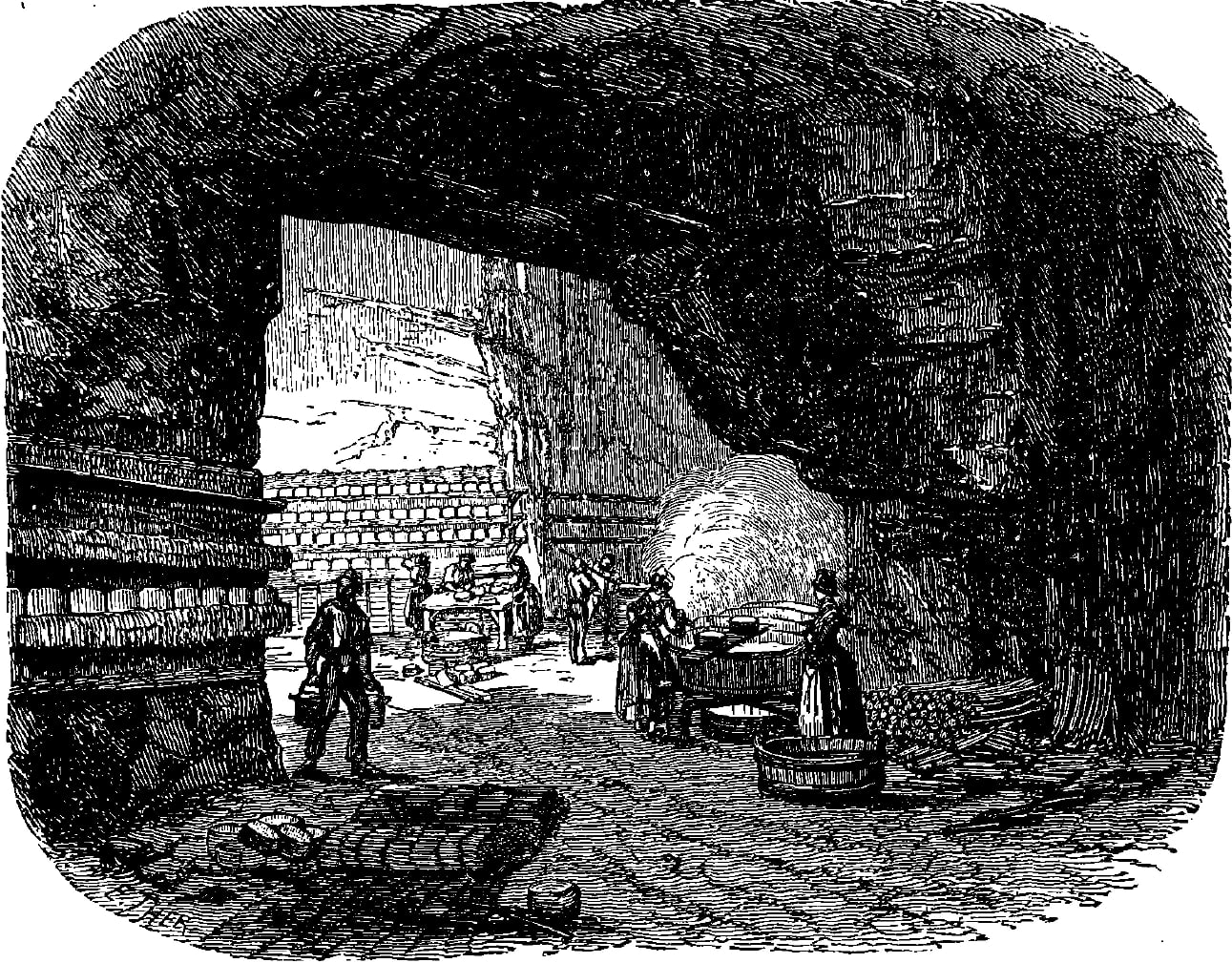
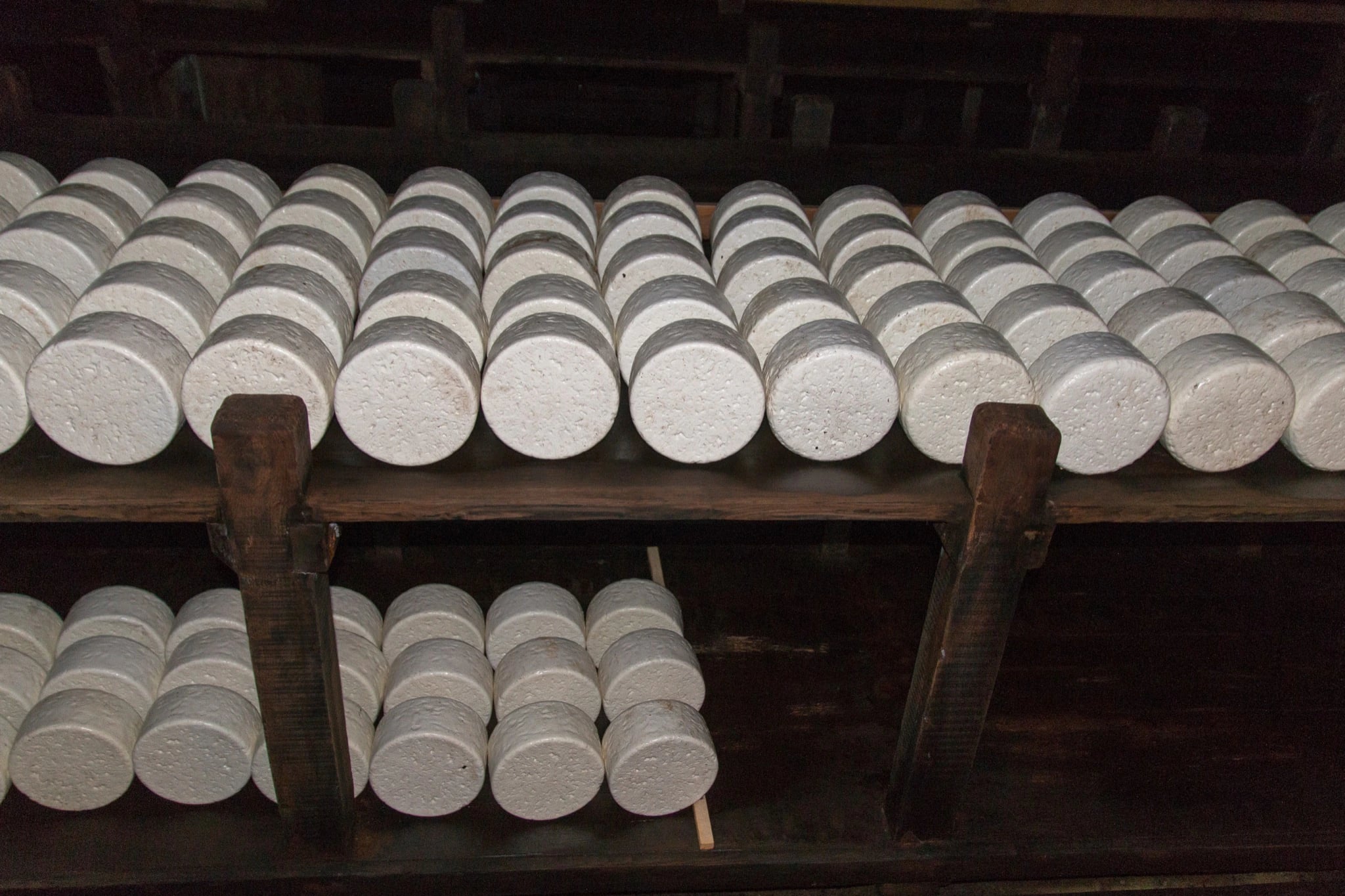
Roquefort is one of the most tightly protected foods in Europe. Anyone can make the cheese, and it is made across the Aveyron and well beyond it, but you are only allowed to sell it as Roquefort if it has spent its months of ripening on oak boards inside the natural caves of the Combalou, a collapsed hillside in southern France with a village of fewer than five hundred people sitting on top of it.
That requirement is written into European law rather than being a matter of tradition, and it is a great deal older than it looks. The oldest surviving document behind it is a set of letters patent dated 4 June 1411, issued in the name of Charles VI of France, which granted the inhabitants of Roquefort-sur-Soulzon a monopoly on ripening their ewes'-milk cheese in the caves beneath their village.
What makes the 1411 grant interesting is everything it leaves out. It says nothing about how the cheese was to be made, or what milk to use, or who was allowed to make it. The one thing it insists on is the place where the cheese was ripened, and that nowhere else would do.
Today we would call that a protected designation of origin, and Roquefort is the earliest documented example of the idea anywhere in the world. It now has a European regulation behind it and a small red-and-yellow label on the packet. In 1411, though, what the king's clerks were actually protecting was a hole in the ground.
What a fleurine is, and why the caves hold at nine degrees
Geologists call the Combalou a landslide, though that undersells it. It is the southern lip of the Causse du Larzac, and the edge of the plateau collapsed at some point deep in the geological past. Limestone came down in a slab, broke up on the way, and settled as a heap of blocks, some of them the size of a house, and the village of Roquefort-sur-Soulzon sits on top of the heap.
A pile of rubble on that scale does not pack together neatly. The spaces left between the blocks are what the industry calls the cellars, and they extend for roughly two kilometres along the escarpment, about three hundred metres across and the same again in depth, and one firm works eleven floors of them.
Cold on its own would not be worth much, because plenty of cellars are cold. The peculiarity here is a set of vertical fissures, the fleurines, which reach from the cellars up through the scree and open on the hillside in the daylight. Air moves through them constantly. Warm air outside means a downward draught into the caves, cold air outside reverses it, and the result is a cellar that ventilates itself and stays near nine degrees at about 95 percent humidity, in August as in February.
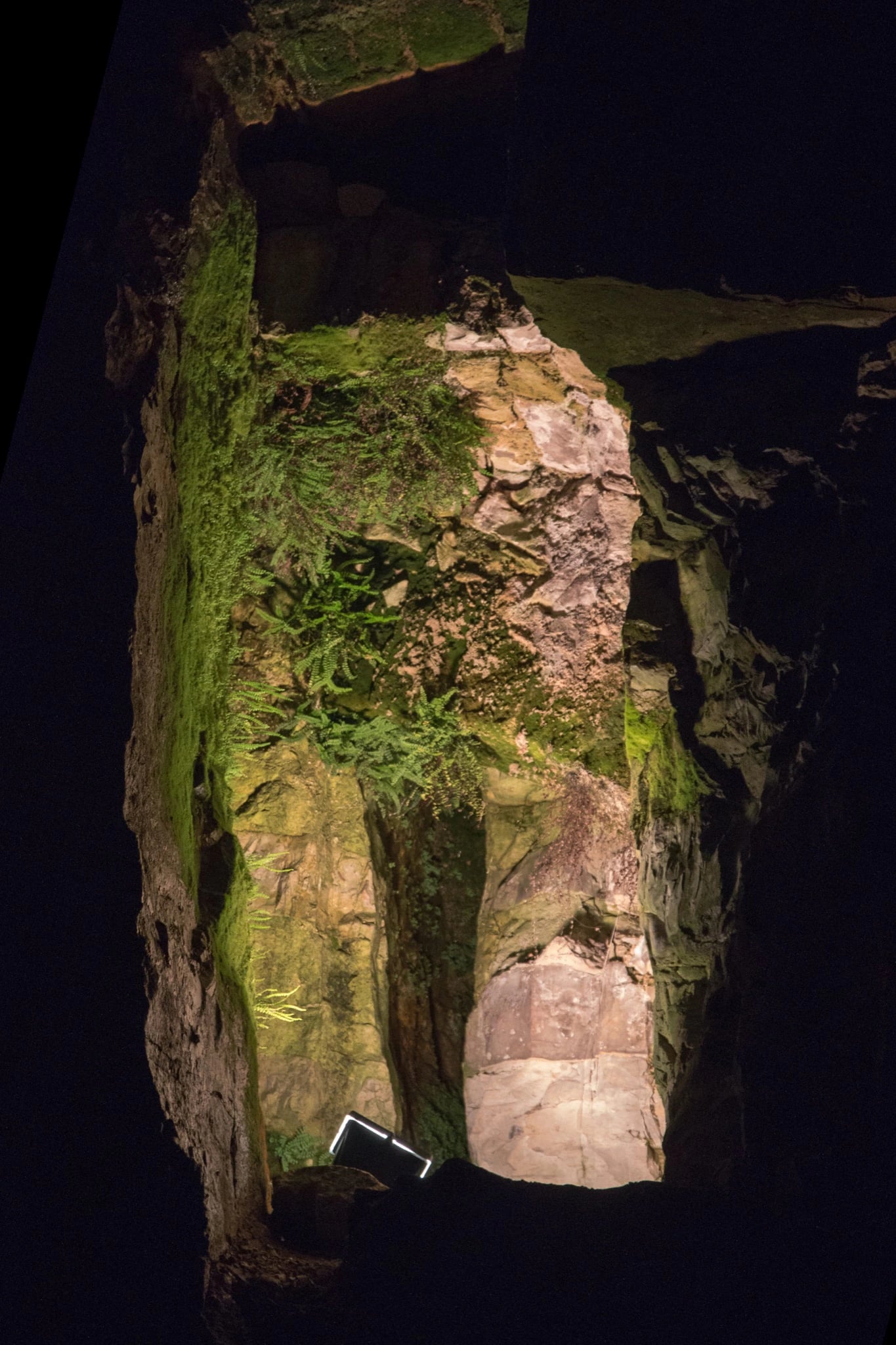
The organism that matters, Penicillium roqueforti, finds these conditions ideal. The mould is not so much introduced here as resident, living in the caves as a wild population, and curd from ewes' milk left on oak boards for two or three months becomes something the next valley cannot copy.
Whether anyone in the village could have explained why is doubtful, and it hardly mattered. They knew the premium. A wheel off these boards fetched more than the same wheel matured three valleys away, and a premium is a standing invitation to counterfeiters.
Who signed the Roquefort charter of 1411
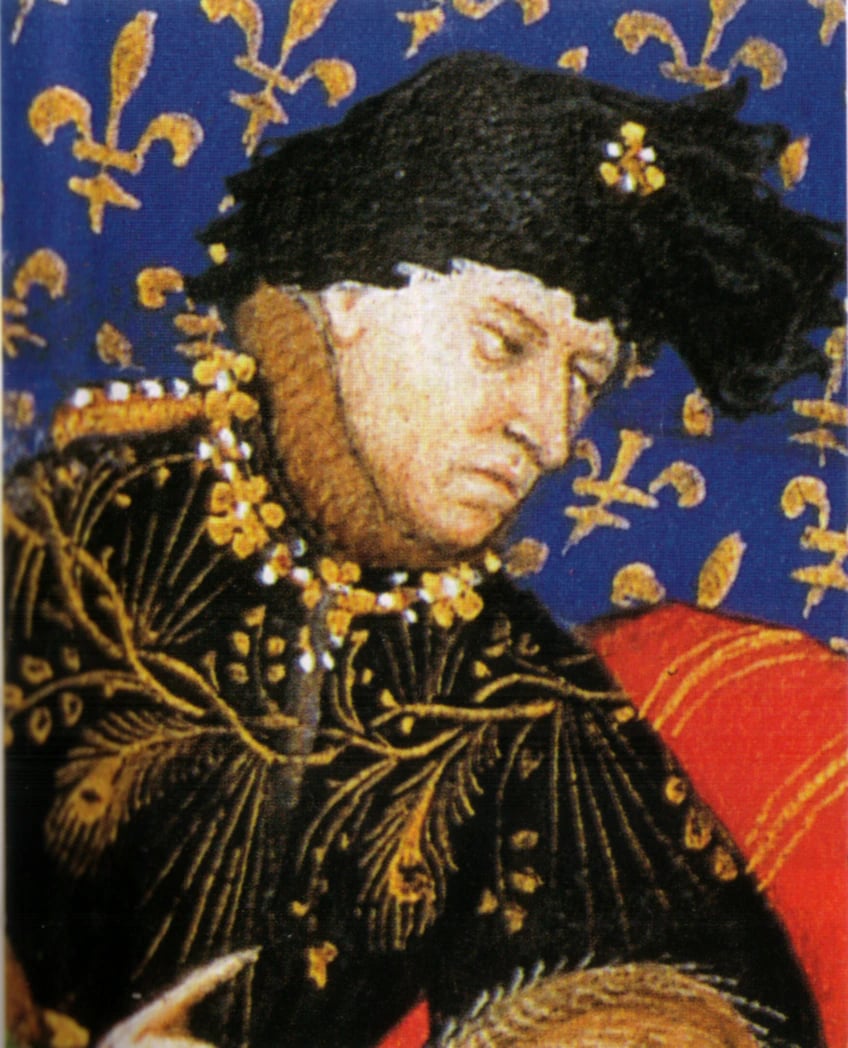
The letters were issued in Charles VI's name, but he was almost certainly in no state to have thought about them. He had come to the throne in 1380 as a boy of eleven. Then in 1392, while riding out on campaign, he had the first of the psychotic episodes that would define the rest of his reign, killing several of his own companions before anyone could restrain him. The attacks kept coming back for the next thirty years, and there were long periods when he did not recognise his wife or his children, and other periods when he did not believe he was the king at all.
While the king was incapacitated, France fell apart around him. The factions around his brother and his cousin had been fighting since the assassination of Louis d'Orléans in 1407, and by 1411 the Armagnac–Burgundian civil war was out in the open. That October, John the Fearless marched into Paris with an army that the chroniclers put at sixty thousand men. The war would run on until 1435, and Agincourt was only four years away.
The lord of the country the caves sat in was Bernard VII, count of Armagnac, Fezensac and Rodez from 1391 to 1418. He was the man the Armagnac faction was named after, and from 1415 he was effectively running France. Whether he had anything to do with a grant to a village in his own county, in the year his party was tightening its grip on the government, no surviving document says. The two things happened at the same time, and that is as far as the evidence will take us.
The text of the letters patent is not something you can go and read for yourself. What survives in every account of them is not the wording but what the wording did.
How far back the cheese goes before the charter
Nothing about the 1411 grant was new to the people receiving it. They had been ripening cheese in the Combalou for generations, and the documentary trail reaches back well past the charter. Around 1060 the abbey of Conques recorded a donation described as fromage de cabanes, which is cheese made at the cabanes, the drystone huts the shepherds occupied while the flocks were up on the summer grazing.
Behind the documents lies an older piece of arithmetic. The ewes came into milk in spring, out on the causses, and milk in that state travels badly and keeps worse. Turning it into cheese was how a spring was carried through to winter, and how it reached a market at all. The caves added the last step, which was to make the result expensive.
Did Pliny the Elder write about Roquefort?
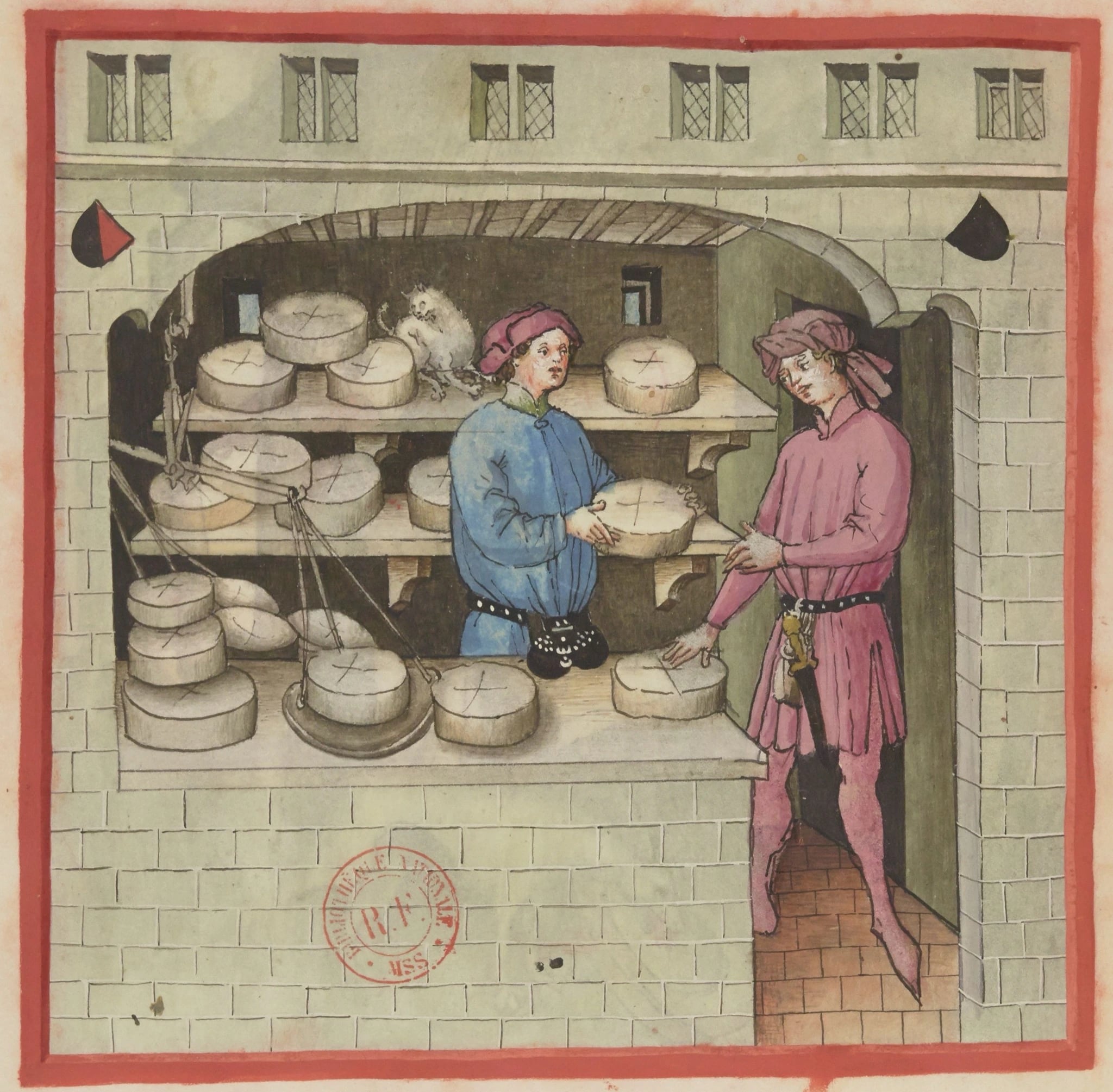
The most repeated claim about the cheese's antiquity is very likely wrong. Pliny the Elder, in the Natural History published in AD 77, lists the cheeses most praised at Rome and names among them those of the Lesurae Gabalicoque pagis, the districts of the Lozère and the Gévaudan in the uplands to the north. In the same sentence he says what their merit consists of: brevis ac musteo tantum, short-lived and only while new. That reads like a description of a fresh cheese, and Roquefort is emphatically not one, because the whole of Roquefort happens in the months on the board.
The identification of Pliny's cheese with Roquefort was made in 1737 by the physician Jean Astruc, in his Mémoires pour l'histoire naturelle de la province de Languedoc, and it was a guess with nothing much behind it. It was a useful guess, and from the 1860s the Société des Caves promoted it hard, because a Roman pedigree sells cheese.
The difficulty is that Pliny nowhere describes a blue cheese, and the phrase everything turns on will not carry the weight put on it. The word musteus is an adjective built on mustum, new wine, and Latin writers apply it to apples, to raw pepper and, in the younger Pliny's letters, to a book just finished. The standard Latin dictionary, Lewis and Short, cites this very sentence about cheese as its example of the sense meaning young or fresh, which is the reading that makes cave ripening least likely, and other readers have taken the passage to mean fresh curd, cheese pickled in grape juice, or something closer to a fondue.
So we are left with an ambiguity rather than a pedigree. What remains once the myth goes is better than the myth, being a genuinely old upland dairying tradition, a nineteenth-century marketing story laid over the top of it, and a charter of 1411 that never needed the decoration.
How old is cheese, and where is the oldest evidence?
The documents run out long before the practice itself does. The earliest hard evidence for cheesemaking is chemical rather than written, and it was published in Nature in December 2012 by Mélanie Salque, Richard Evershed and their colleagues at Bristol. They had tested perforated clay sieves dug up in Kuyavia, in northern Poland, and found milk fats still held in the fabric of the pottery. The sieves date to the sixth millennium BCE, so we are looking at something like seven thousand years.
Sieving milk seems a strange thing to bother with until you remember that these people could not drink it. Lactase persistence in adults is a young mutation, and to most Neolithic Europeans a bowl of fresh milk was closer to a poison than a meal. Most of the lactose leaves with the whey when you drain the curd. That is the step that made dairying worth doing at all, because it turned an animal nobody could safely drink from into one worth keeping.
For the oldest cheese that anyone has actually handled we have to go somewhere stranger. A 2024 paper in Cell examined a white residue smeared along the necks of Bronze Age mummies in the Tarim Basin, in Xinjiang, and identified it as kefir cheese of about 3,600 years old. The cow's milk and the goat's milk in it had been fermented separately.
What the 1411 charter became: 1666, 1925 and the PDO
Later kings went on renewing what Charles VI had granted. Charles VII confirmed it in 1457, and his successors did the same after him for the next two centuries. The confirmation everybody actually quotes, though, came from the Parlement de Toulouse on 31 August 1666, which upheld the arrangement, restated the villagers' monopoly on ripening, and fined the people running counterfeit operations out of huts in the neighbourhood.
the monopoly of cheese maturing as practised from time immemorial in the caves of the said village
Parlement de Toulouse, 31 August 1666
You will find that line on packaging and all over cheese websites, and it is almost always attributed to 1411. It belongs to 1666. The letters patent are older by two hundred and fifty-five years, but the memorable wording is from Toulouse.
France as a whole caught up with the villagers in 1925. A law of 26 July that year, signed under President Gaston Doumergue, made Roquefort the first French cheese with a protected designation of origin, and the appellation d'origine contrôlée system grew out of it.
The boundary was still argued over for another generation. In 1961 the tribunal at Millau settled it on the terms that still apply, which is that the method can be used anywhere in the south of France, but only cheese ripened in the Combalou can be sold as Roquefort. Europe adopted the idea in July 1992, in Council Regulation 2081/92, and the PDO and PGI schemes set up under it now cover several hundred regional foods.
One effect of the rule was not intended by anyone. Producers have to raise their mould in their own caves rather than buy in a starter culture, and a 2023 paper in Evolutionary Applications looked at what that has done to the fungus. Penicillium roqueforti at Roquefort is still genetically diverse. The rest of the world's blue cheese has narrowed onto a single clonal lineage, and the same mould turns up in Gorgonzola, Stilton and Danish blue.
Fewer than five hundred people live in the commune today, and in 2022 it supported 1,170 jobs. They are there because a piece of the Larzac gave way, and because somebody in 1411 decided that was worth putting into law.
Sources
- Roquefort — Wikipedia — the letters patent of 4 June 1411, cited there to The Oxford Companion to Cheese (Oxford University Press, 2016); the EU rule that only cheese aged in the Combalou caves may bear the name; the Pliny attribution and its critics; the 1961 Millau ruling
- Roquefort (fromage) — Wikipédia — the monopoly granted by letters patent of 4 June 1411; the Conques act of c. 1060 and the fromage de cabanes; the renewals by Charles VII and his successors; Pliny's wording; the law of 26 July 1925
- Roquefort-sur-Soulzon — Wikipedia — the collapse of the Combalou plateau and the fleurines that still ventilate the cellars; the commune's population and its 1,170 jobs in 2022
- Roquefort AOP — the first PDO in history — the Parlement de Toulouse ruling of 31 August 1666 and its wording; Charles VII's charter of 1457; the 1925 law signed under President Doumergue
- Pliny the Elder, Natural History XI.97 §240 (Mayhoff, ed.) — the Latin of the Lozère and Gévaudan passage — Lesurae Gabalicoque pagis, sed brevis ac musteo tantum commendatio. The Gabalicique and Gabalidique forms in wide circulation online are corruptions
- Lewis & Short, A Latin Dictionary — musteus (Perseus Digital Library) — musteus as an adjective formed on mustum, and the nouns it takes elsewhere — Cato's apples, Pliny's raw pepper (NH 12.7.14.29), the younger Pliny's just-finished book (Ep. 8.21.6). The dictionary cites this very cheese passage, NH 11.42.97.240, as its example of the sense meaning young or fresh, which is what the Roquefort identification has to argue around
- University of Bristol — earliest evidence for cheesemaking, 12 December 2012 — Salque, Bogucki, Pyzel, Sobkowiak-Tabaka, Grygiel, Szmyt and Evershed, Nature: the perforated sieves from Kuyavia, sixth millennium BCE
- ScienceDaily — the world's oldest cheese, 25 September 2024 — Liu et al., Cell, on the kefir cheese found on the Tarim Basin mummies
- Crequer et al., Evolutionary Applications (2023) — the five populations of Penicillium roqueforti, and why the Roquefort population stayed diverse where the rest went clonal
- Charles VI of France — Wikipedia — the accession in 1380, the first psychotic episode in 1392, and the course of the illness
- Armagnac–Burgundian Civil War — Wikipedia — the assassination of Louis d'Orléans in 1407, the state of the kingdom in 1411, and John the Fearless entering Paris that October
- Bernard VII, Count of Armagnac — Wikipedia — count of Rodez 1391–1418, leader of the Armagnac faction, and effective ruler of France from 1415
- Council Regulation (EEC) No 2081/92 — WIPO Lex — the regulation of 14 July 1992 that created the European PDO and PGI schemes


