A Timeslip story
The twelve clerks who ate poison so America could trust its food
Harvey Wiley could not prove that the chemicals going into American food were doing any harm, and no manufacturer was going to prove it for him. So he fitted out a dining room in the basement of his own bureau, recruited a dozen healthy young clerks, and began weighing everything they ate — and everything they passed.


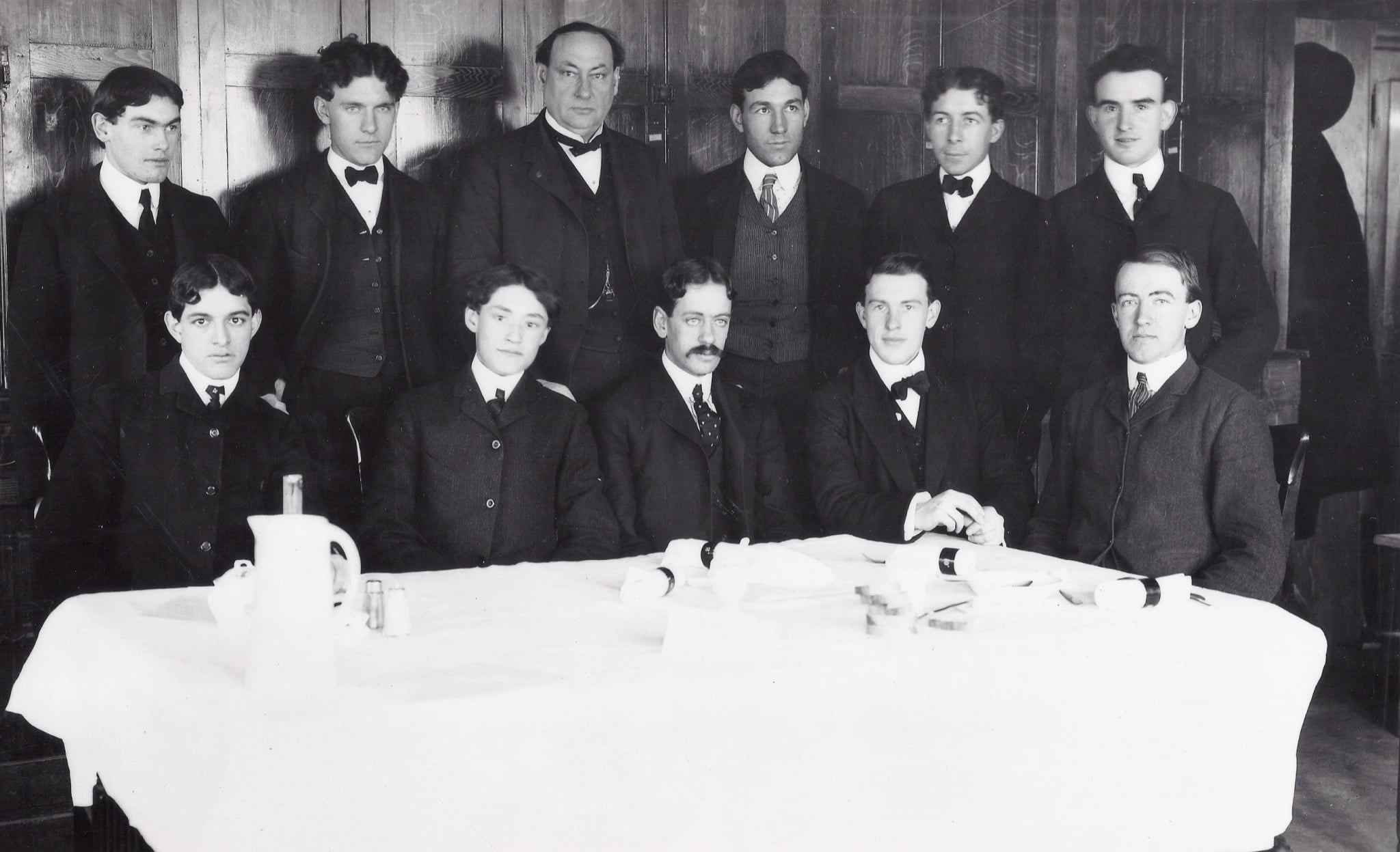
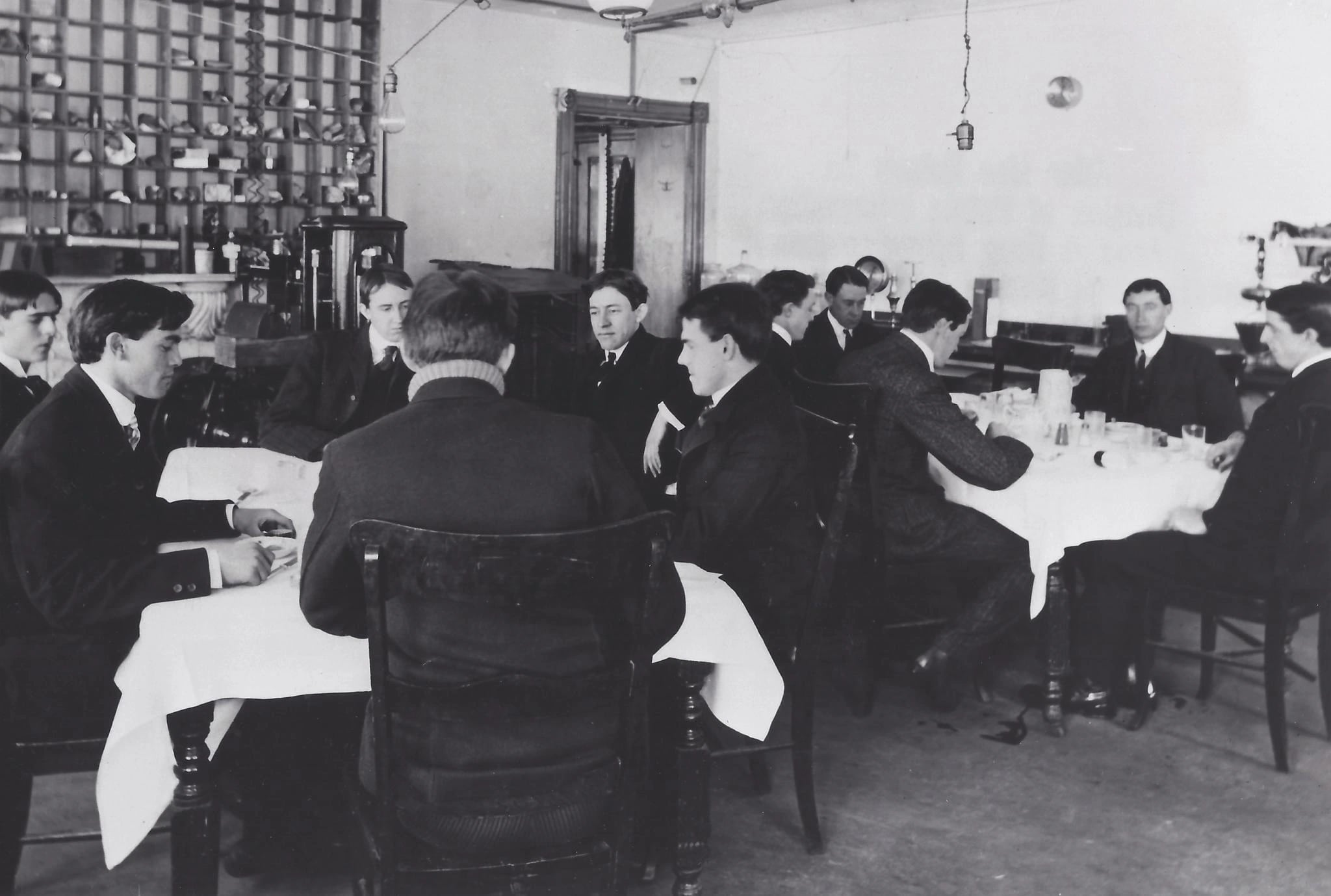
The room was in a basement on the National Mall in Washington, underneath the red-brick headquarters of the United States Department of Agriculture. It held a small kitchen, a laboratory and a long table under white linen. On an autumn evening in 1902, twelve young men in dark sack suits and high starched collars sat down at that table to a dinner in which every portion had been weighed and entered in a ledger before it was carried in.
The man who had arranged it was Harvey Washington Wiley, the department's chief chemist, who called what he was doing the hygienic table trials. Over the next five years his volunteers would be fed borax, salicylic acid, benzoates, sulphites, formaldehyde, copper sulphate and saltpetre — the preservatives already going into American food without any buyer's knowledge or consent — while his staff measured what those chemicals did to them.
The newspapers supplied the name that stuck. Within a year the twelve clerks were known across the country as the Poison Squad, and four years after that the argument they had been eating their way through became the first federal food law in American history.
What was in American food before 1906
Two things are easy to forget about American food at the turn of the twentieth century. The first is how much of it was not what it claimed to be. The second is that saying so was nobody's legal obligation: there was no federal law requiring a label to be true, or requiring a label at all.
Milk was watered and whitened again with chalk or plaster, and some dairies stirred in formaldehyde, sold under cheerful trade names, to stop it souring on the way into the city. Meat was dosed with borax and salicylic acid to disguise its age. Canned vegetables were greened with copper salts. Pure Vermont maple syrup was often coloured and flavoured Iowa corn syrup. Coffee was cut with chicory, roasted peas or ground bone.
The manufacturers' defence was not absurd. Preservatives, they said, were indispensable in a country where food travelled a long way to reach a city, and nobody had shown that the small quantities involved did any harm. That was true. Nobody had tried.
Who was Harvey Wiley?
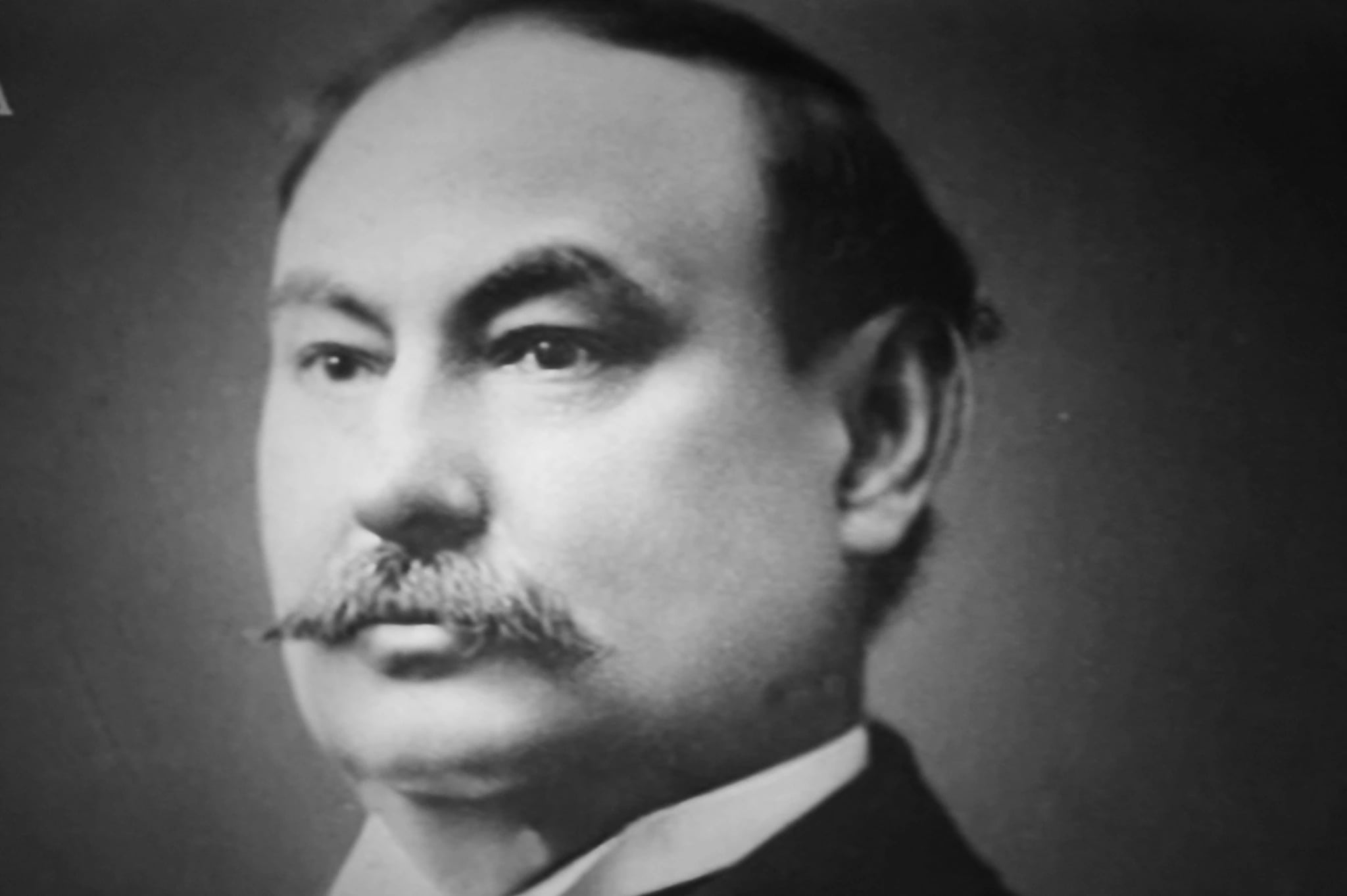
Wiley was born in a log farmhouse near Kent, Indiana, in October 1844. He took a medical degree, left medicine for chemistry, taught at Purdue and served as Indiana's first state chemist before being appointed in 1883 to run the Agriculture Department's chemical division. He held that job for twenty-nine years.
From that desk he published bulletin after bulletin on food adulteration and watched bill after bill die in Congress. The burden of proof, he held, belonged with the manufacturers — and since nobody was going to make them carry it, he would carry it himself.
In 1902 Congress wrote $5,000 into his division's budget with language authorising precisely that: to investigate the character of food preservatives, colouring matters and other substances added to foods, and to determine their relation to digestion and to health. He spent it on a dining room.
What the Poison Squad volunteers signed up for
Wiley's reasoning about whom to recruit was blunt: if a preservative visibly damaged the healthiest people in the country, it was doing far worse to children, the elderly and the sick. So he looked for the most resistant subjects available — young men in their twenties, certified free of disease by a surgeon detailed from the Public Health and Marine Hospital Service, and re-examined every week.
Twelve volunteered without difficulty, most of them Agriculture Department employees who had passed the civil-service examination, and there was never a shortage across the five years. They enlisted for a year and signed a pledge that reads now like a monastic rule: nothing to eat or drink but what was served at that table, with even the water measured and reported; ordinary jobs and ordinary hours kept; every particle of their secreta, urine and faeces both, handed over daily for analysis; and the government released from any liability if the experiment injured them.
They were not locked in the basement, whatever the retellings say. Years afterwards a Congressional committee asked Wiley directly whether the volunteers had been allowed to live at their homes, and he answered, “Yes, sir.” What they gave up was their diet and their privacy, not their liberty.
What the Poison Squad actually ate
Each trial opened with a fore period of about ten days on weighed, unadulterated food, adjusted daily — a little more if a man lost weight, a little less if he gained — until his normal ration was known exactly. Weight, temperature and pulse went into the ledger before every meal. Only then did the preservative go in, in five-day blocks running to about twenty days, followed by ten more days of clean food. Wiley admitted that ten days was rarely enough to bring a man back.
The food itself was good: cooked by a chef certified by the Civil Service Commission out of the best ingredients Wiley could buy, with the men having a say in the menu. The vegetables came from tins canned to order, so that every tin used across a year was chemically identical.
Borax came first, six men on boric acid and six on borate of soda so the two could be compared. Wiley hid it in the butter, and the method broke down on taste. The men could not identify what they were eating, but they could tell something about the butter was wrong, and they went off it completely. He moved the borax into the milk, then the meat, then the coffee, and each time the appetite for the dosed dish collapsed. A constant food intake was the whole basis of the experiment, so he gave up concealment and switched to gelatin capsules, swallowed halfway through the meal under supervision.
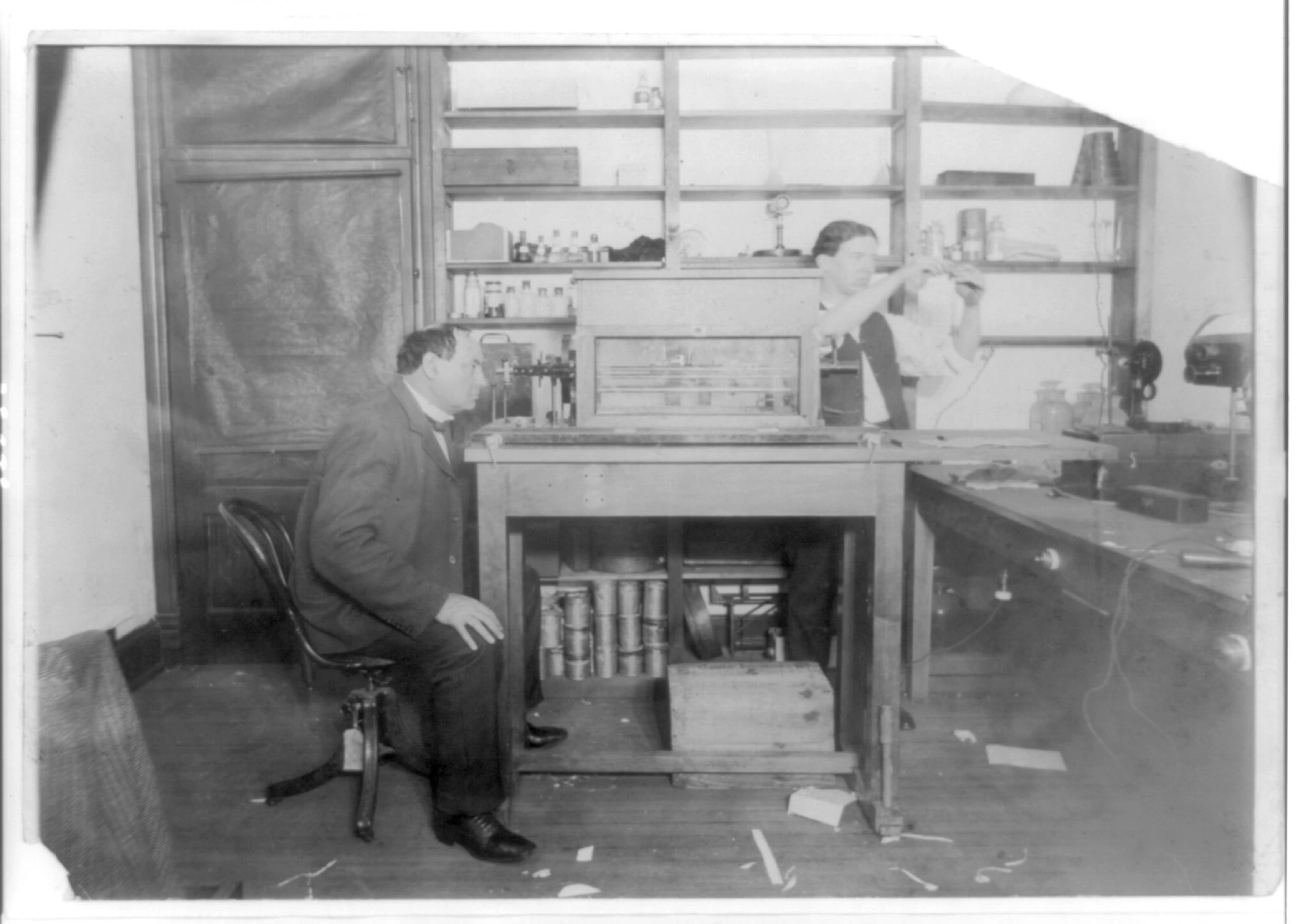
The borax results appeared in 1904 as Part I of Bureau of Chemistry Bulletin 84, four hundred and seventy-seven pages of it, and they were not the indictment Wiley had wanted: borax proved among the least toxic things he ever tested. The case histories were another matter — appetite falling away, a heavy fullness in the stomach, dull persistent headache, in some men real abdominal pain. He stopped a trial whenever a man became too ill to work, which happened often enough. Formaldehyde was abandoned early. It made them far too sick.
How the Poison Squad got its name
Wiley had not sought the publicity and at first resented it. Then he found reporters interviewing his cook through a basement window, and decided the only sane response was to open the front door instead. He began reporting the experiment to the newspapers in detail, and took most of his own meals at the table with the squad.
I suppose it was the most widely advertised boarding house in the world.
Harvey Wiley, testifying before a Congressional committee
One of the reporters who turned up every day was a cub at the Washington Post named George Rothwell Brown. It was Brown who christened the volunteers the Poison Squad, and the name went national almost overnight. The bill of fare was reprinted in papers across the country, and by October 1903 Lew Dockstader's minstrel troupe was performing a Song of the Poison Squad, whose chorus promised the diner mothballs next week, à la Newburg or else plain, and that he might get over it but would never look the same.
A sign hung in the dining room, and it survives in a photograph from the bureau's own files: None but the brave can eat the fare. Retellings render the wording various ways. They have never differed on its spirit.
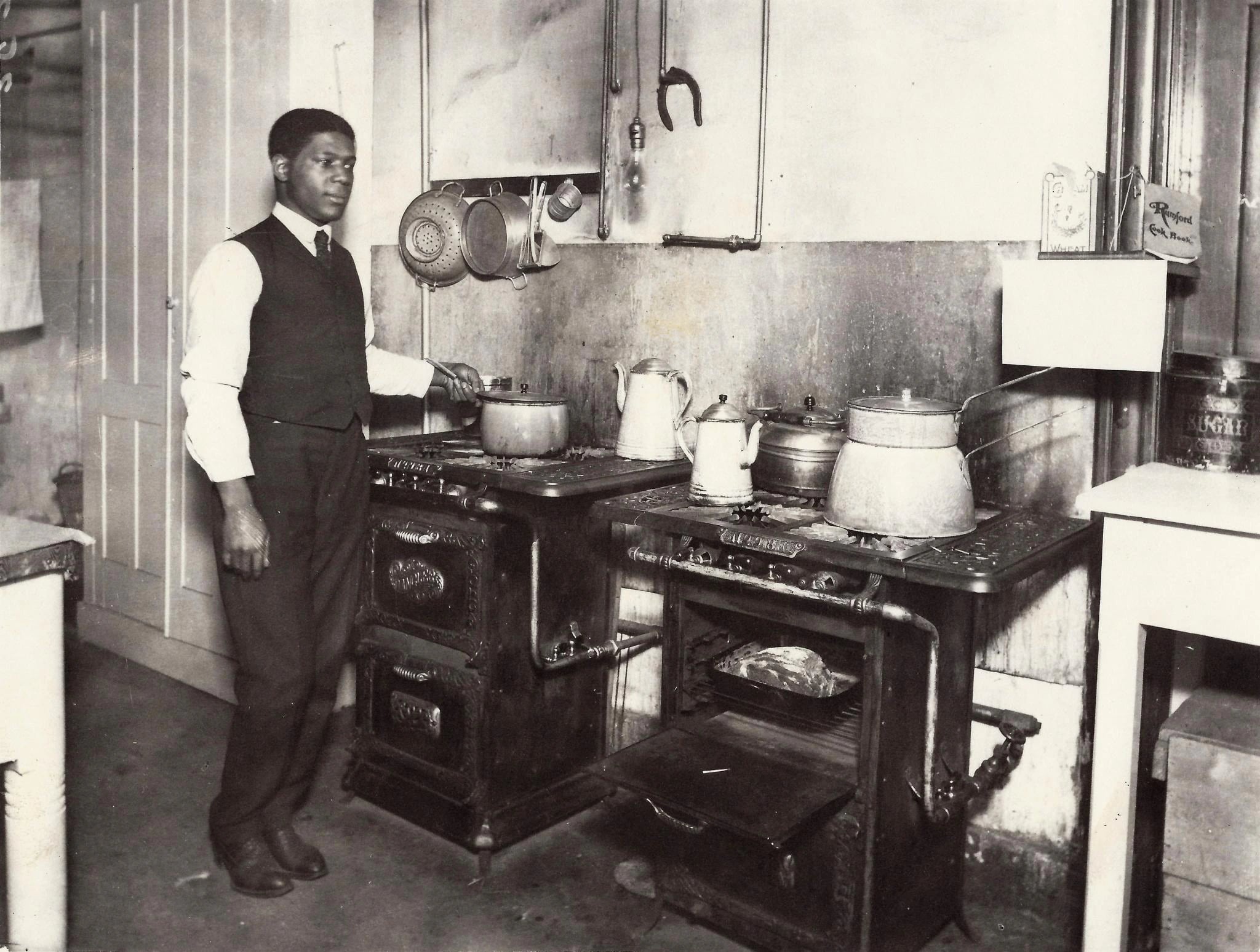
What the Poison Squad achieved
Wiley worried that the joke would swamp the science. What it did instead was put twelve names and a dinner table where an argument about parts per million had been. By the time Upton Sinclair's The Jungle appeared in February 1906 and turned the public's stomach about the meatpacking houses, four years of Poison Squad headlines had taught the country to wonder what was in everything else. On 30 June 1906 Theodore Roosevelt signed the Pure Food and Drugs Act — largely written by Wiley, and still known as the Wiley Act — along with the Meat Inspection Act the same day.
The victory was partial and Wiley knew it. The act banned adulteration and misbranding but set few concrete standards, and he spent six years fighting inside his own department over enforcement. In 1908 the feeding studies were taken off the Bureau of Chemistry and handed to a referee board under the chemist Ira Remsen. Two volumes of the squad's own results, on copper sulphate and saltpetre, were never allowed into print; Wiley called the drawer they sat in the morgue.
He resigned on 15 March 1912 and went to Good Housekeeping, where for eighteen years he ran the laboratory behind the magazine's seal of approval, reaching a circulation no government bulletin ever had. He died in Washington on 30 June 1930, twenty-four years to the day after the act was signed, and is buried at Arlington. His bureau outlived him under another name: reorganised as the Food, Drug, and Insecticide Administration in 1927, and shortened in 1930 to the Food and Drug Administration.
No formal follow-up was ever carried out on the volunteers, and the anecdotal record suggests none of them suffered lasting harm. One squad member, William O. Robinson of Falls Church, Virginia, died in 1979 at the age of ninety-four.
The building lasted less well than the men did. Adolf Cluss's red-brick headquarters, finished in 1868, stood on the Mall between 12th and 14th Streets among a conservatory, an arboretum and the Victorian gardens the McMillan Plan of 1902 wanted swept away for open lawn. It was pulled down in 1930, the year Wiley died and the year his bureau took its modern name.
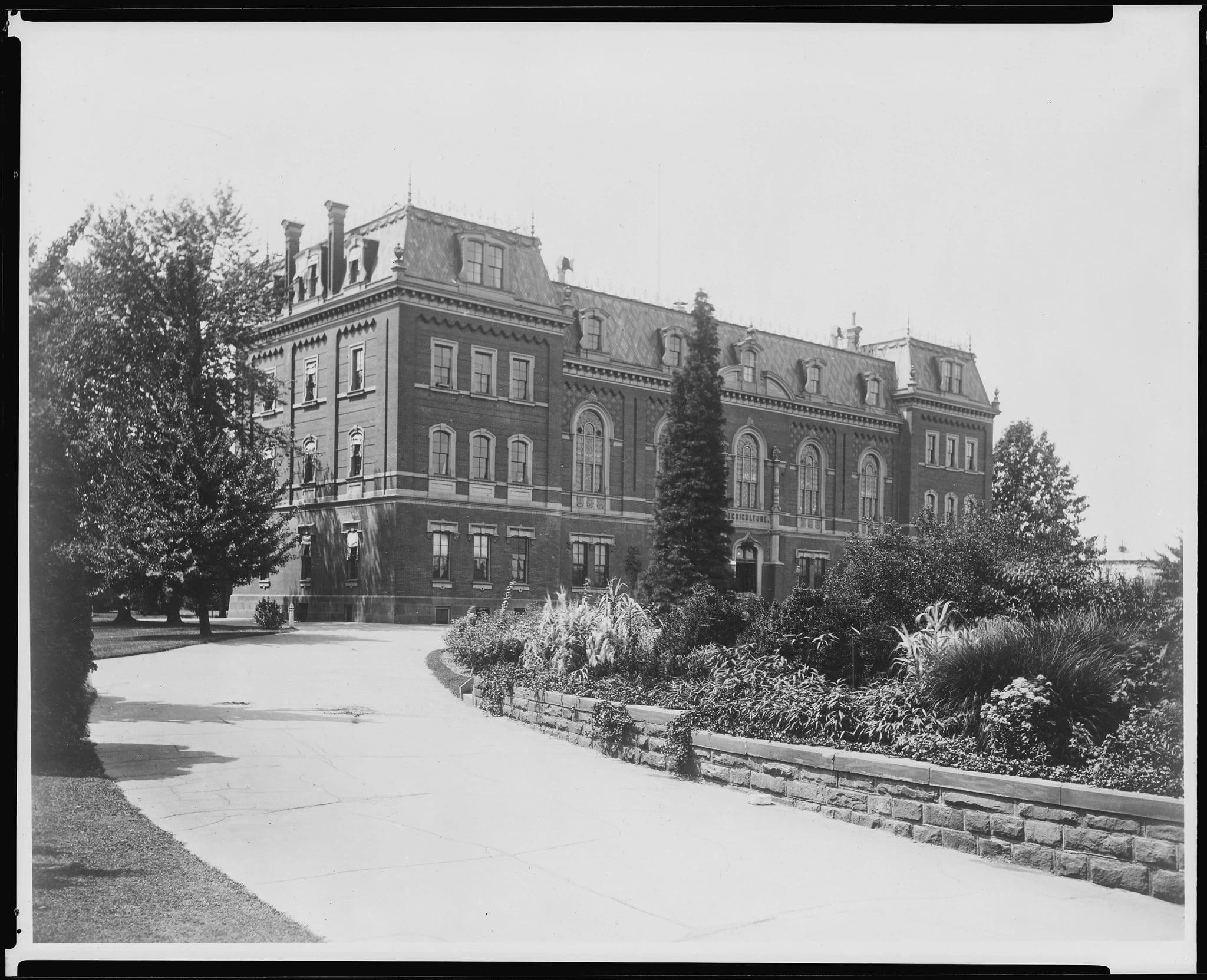
Cross the grass north of the Whitten Building today and you are walking over the room where the Poison Squad sat down to dinner. No ethics committee would let any of that experiment near a volunteer now. It is also the reason a packet has to tell you what is inside it.
Sources
- Carol Lewis, The "Poison Squad" and the Advent of Food and Drug Regulation, FDA Consumer, November–December 2002 — bound with an excerpt of Wiley's own account and his testimony before the House Committee on Interstate and Foreign Commerce — the source for the appropriation, the pledge, the method, the borax trials and the naming
- FDA's Origin — U.S. Food and Drug Administration — the 1906 act and the Meat Inspection Act, signed the same day
- The Long Struggle for the Law — U.S. Food and Drug Administration — the bureau's renaming in 1927 and 1930
- Harvey W. Wiley: Pioneer Consumer Activist — FDA Consumer
- Harvey Washington Wiley — Science History Institute — Wiley's early career, his resignation in 1912 and his years at Good Housekeeping
- Harvey Wiley's Fierce Pursuit of Food Safety — Science History Institute
- 'Poison Squads' Tested Chemical Preservatives — Chemical & Engineering News — the seven substances tested between 1902 and 1907, and the fate of Bulletin 84
- The Poison Squad — American Experience, PBS
- Harvey Washington Wiley — Wikipedia
- United States Department of Agriculture Building (1868) — Wikipedia — Adolf Cluss's building, its grounds and its demolition in 1930
- The McMillan Plan — Wikipedia — the 1902 proposal to clear the Mall's Victorian landscape
- History and culture of the National Mall — National Park Service
- Deborah Blum, The Poison Squad: One Chemist's Single-Minded Crusade for Food Safety at the Turn of the Twentieth Century (Penguin Press, 2018) — the book behind most of the modern retellings, including the minstrel song and the dining-room sign


_(7003467377).jpg)

_(6800851132).jpg)
_-_NARA_-_512817.jpg)