A Timeslip story
Miles Franklin spent a year as a housemaid under a false name
She was twenty-three, and the most talked-about young novelist in Australia. She spent the winter of 1903 on her knees at other people's fireplaces, gathering material for a book nobody would print.


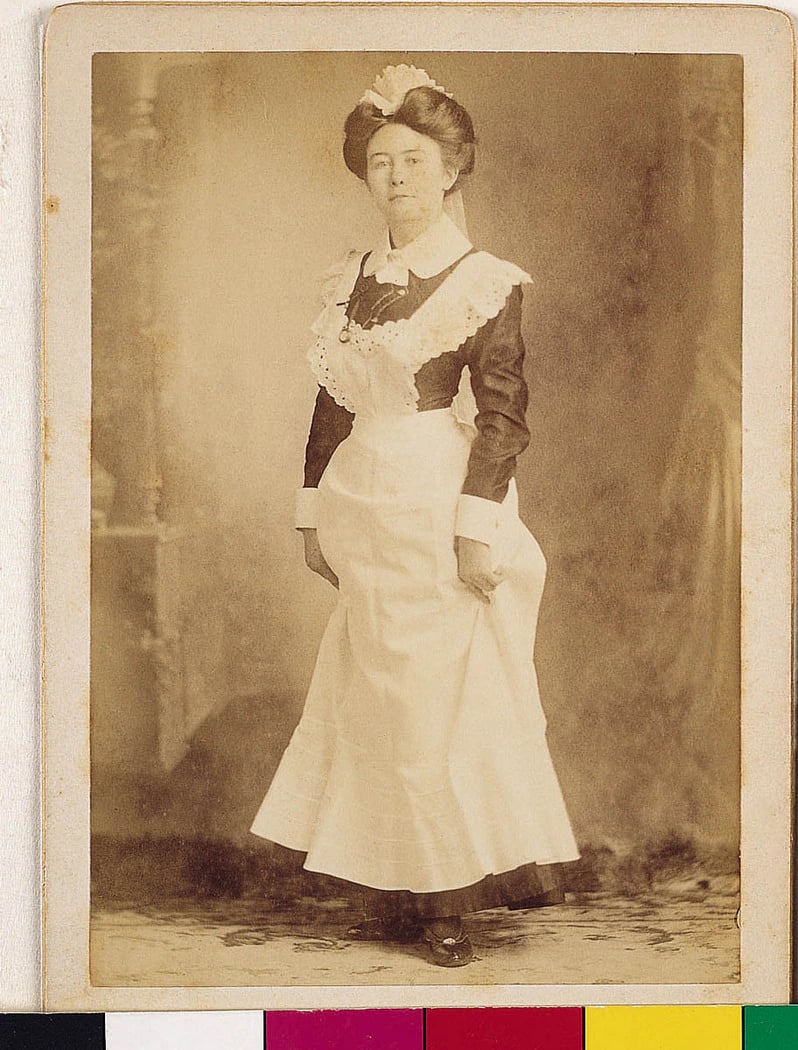
The guests in the drawing room were talking about a novel — the one everybody in Australia seemed to have read that year. A funny, furious, scandalous book by a girl from the bush, whose heroine wanted a life of her own and would not marry to get one. Somebody in the party had a copy. They discussed its author with the freedom people reserve for somebody who is not present.
She was present. She was kneeling at the grate behind them in a cap and apron, building up the fire, and the name she had given the registry office was not the name on the title page.
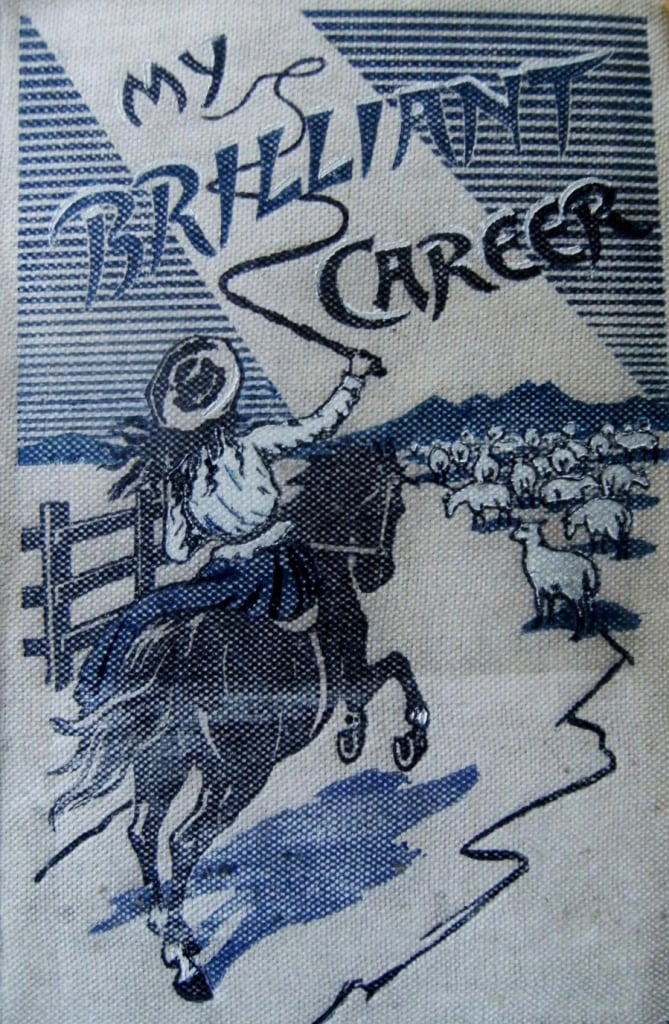
Stella Maria Sarah Miles Franklin published as Miles and let readers draw their own conclusions. My Brilliant Career had appeared in 1901, written in her late teens on a farm in New South Wales, and it had made her the most talked-about young writer in the country. Two years later she was in domestic service in Sydney as Sarah Frankling, a country girl looking for a place, having told her literary and political friends that she had gone abroad. She stayed in service, moving between households, for exactly twelve months: 7 April 1903 to 7 April 1904.
She was not doing it for a dare. She went in to write a book about the women who ran other people's houses, and she meant to write it from inside the houses. That book has still not been published.
Why Miles Franklin withdrew My Brilliant Career
The novel was finished by 1899, when she was still in her teens. She sent the manuscript to Henry Lawson, already the best-known writer in the country. He liked it, wrote a preface for it, and carried it to his own publishers in Edinburgh; William Blackwood & Sons brought it out in 1901.
Fame arrived at once and was not enjoyable. Sybylla Melvyn, the heroine, wants books, music and a life of her own, and turns down the marriage that would settle her. Readers in Franklin's own district searched the novel for themselves and were satisfied that they had found themselves. Neighbours took offence, and so did her family. She was twenty-one, and had learned what it costs to write plainly about people who can recognise themselves.
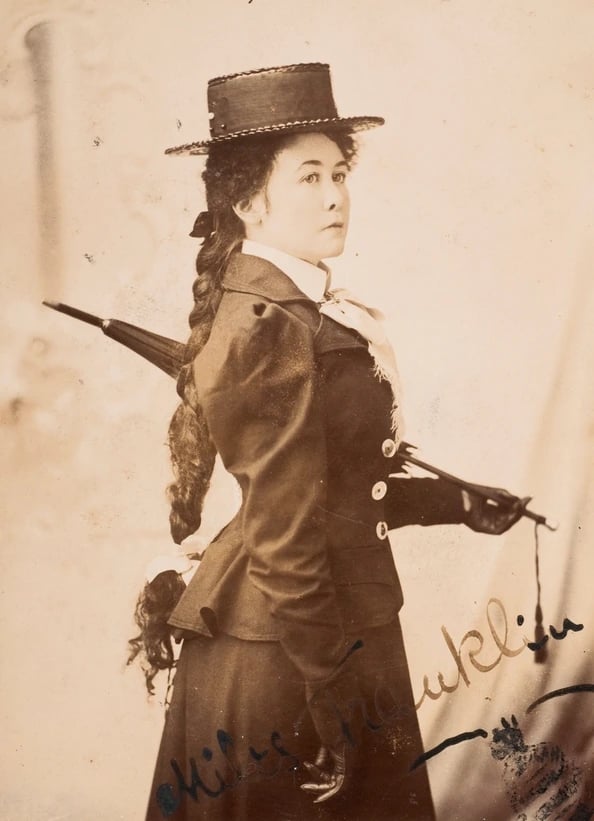
She spent the rest of her life trying to undo it. In the end she withdrew the book from republication entirely and would not let it appear again while she lived. The novel that made her name was out of print, on her own instructions, for most of the years she was famous for it.
Why Miles Franklin went into domestic service
From 1902 she was living in Sydney, drawn into the circle around Rose Scott, who stood at the centre of the city's suffrage and feminist politics. It was a world of committees, letters and campaigns, and one of its causes was being argued over in every newspaper in the country: the servant question.
Domestic service was the largest single employer of women in Australia. Two-thirds of working women had been servants in 1857, and the proportion was still fifty percent in 1901. What the servant question meant depended on which side of the arrangement you asked. Employers said girls were scarce, unreliable and not deferential enough. Servants had a longer list, and it was about hours, housing and money.
Franklin decided to settle it from below. On 7 April 1903 she presented herself at a registry office, gave the name Sarah Frankling, said she was up from the country and wanting a place, and was hired. Beyond a few trusted friends, nobody knew where she had gone.
For a year in 1903-04, disguised as 'Sarah Frankling', she worked in domestic service in Sydney and Melbourne seeking literary material.
Australian Dictionary of Biography, on Stella Maria Sarah Miles Franklin
What domestic service was like in Australia in 1903
The working day began before six in the morning, or five when there was washing, and finished after seven at night. Pay was a running argument in the press: a Herald columnist writing as “An Old Housekeeper” had reckoned a fair wage at ten or twelve shillings a week “with plain food”, though that judgement dated from 1882 and was still being quoted. In 1901 domestic workers in Melbourne petitioned for a sixty-hour maximum week, every second Sunday off, and sleeping quarters that somebody would come and inspect.
Franklin's own year ran up and down the ladder of the trade. She started at the bottom as a “General” — the maid-of-all-work — in a house at Waverley, near Bondi, where a gas stove exploded and burned her face. She left for an employer she considered fonder of her dogs than of her own family. She was parlour maid at a crowded boarding house on the harbour, where the staff called the dining room “the zoo”. She worked in a politician's house. She closed the year with a society family, a merchant, a doctor and a country family in Melbourne.
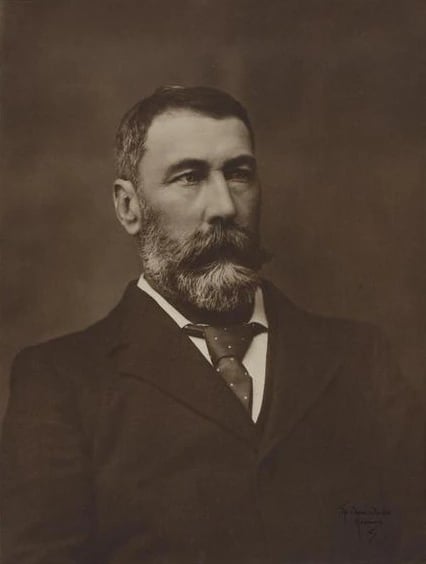
The politician can be named. Richard Edward O'Connor was Senator for New South Wales and the first Leader of the Government in the Senate, with a large family to keep a house for. In September 1903, halfway through Franklin's year, he resigned his seat to take a place on the first bench of the High Court of Australia. Nothing suggests that anybody under his roof knew whose hands were laying their fires.
The country those houses stood in was two years old. Six self-governing colonies had voted themselves into one Commonwealth on 1 January 1901, and the new federal Parliament, having nowhere of its own to sit, was borrowing the Victorian parliament's chamber in Melbourne. Sydney itself was still a gaslit city: the first public electric street lighting was not switched on until 8 July 1904, when 343 lamps came on from the new power station at Pyrmont.
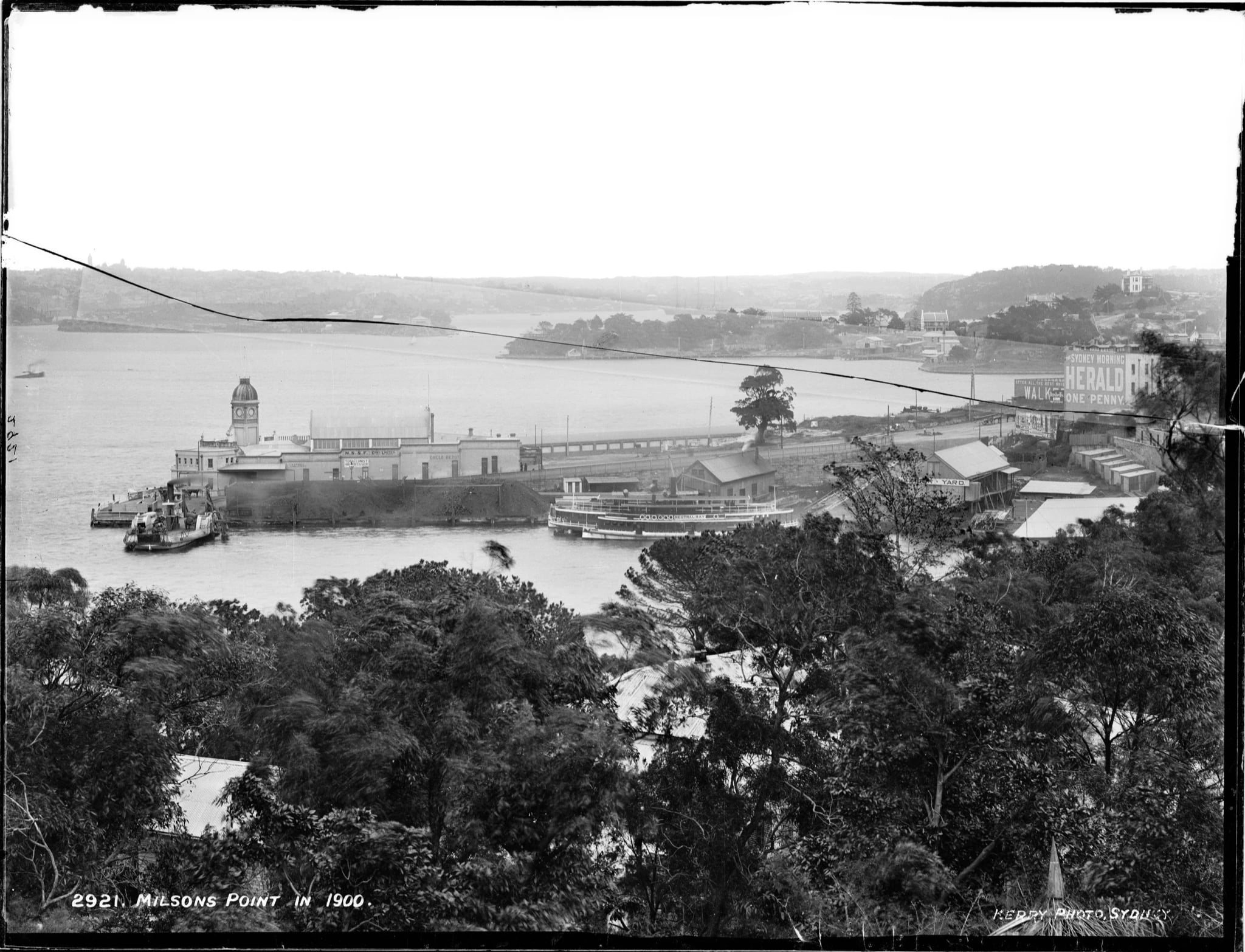
Water, not road, held the city together. Ferries ran continuously between Sydney and the north shore — there would be no bridge for another twenty-nine years — which is why the large houses stood where they did at Kirribilli and Milsons Point, looking down on the traffic that made them reachable.
Did Miles Franklin really overhear guests discussing her own novel
It is a very good story, which is a reason to handle it carefully. It reaches us down a single chain.
Franklin wrote her year up as a book called When I was Mary-Anne, A Slavey. The manuscript is in the Miles Franklin Papers at the State Library of New South Wales and has never been published. The scholar Kerrie Davies read it, together with what survives of the diary Franklin kept, and published her findings: a peer-reviewed article in Literary Journalism Studies in 2020, then a book and an essay in The Conversation in 2025. The scene at the fireplace is her reading of Franklin's own account of it. There is no independent corroboration, because nobody else has published from the manuscript and the manuscript is not online.
What the sources supply is the incident without its circumstances. No date, no house, no names for the guests — and Franklin gave the households comic invented names in the manuscript, “Geebung Villa” and the like, so the primary document is unhelpful about addresses by design. Davies identifies the politician's house as Keston, at Kirribilli; no street address for it has been published anywhere, and the overhearing is not attached to that house or to any other.
A second story survives from the same year and on the same authority. A woman Franklin had been introduced to at a government reception handed her a coat at a doorway without a flicker of recognition.
The year, at least, can be reasoned to. She was in service from April 1903 to April 1904; the Sydney households came first and the Melbourne ones last; and a fire that somebody has to build up belongs to a Sydney winter. That puts the scene in the middle of 1903 — an inference rather than a citation, and worth saying so plainly.
What happened to When I was Mary-Anne, A Slavey
No publisher took it. Two brown cloth-bound volumes of sketches survive and the finished draft is lost. Out of twelve months of work Franklin printed almost nothing at the time: a short piece on the Red Page of the Bulletin headed “Letter from Melbourne”, on 31 March 1904, written as her year ran out; an opinion piece in the Sydney Morning Herald in 1907 that argued from her “practical experience” for better conditions; and a small article in the Chicago Tribune. After that Mary-Anne is not heard from again.
What happened to Miles Franklin after her year in service
On 7 April 1906 — three years to the day after she first walked into the registry office — she sailed for the United States in the Ventura. She spent close to a decade in Chicago working for Alice Henry at the National Women's Trade Union League and co-editing its magazine, Life and Labor. In March 1917 she volunteered for the Ostrovo Unit of the Scottish Women's Hospitals and served near Lake Ostrovo from that July until February 1918. From 1928 she published a second body of novels as “Brent of Bin Bin” and left the country to argue about who Brent was. She settled in Australia again in 1932.
She died on 19 September 1954 at Drummoyne, and left the residue of her estate to endow a prize for the Australian novel. The first Miles Franklin Literary Award was presented in 1957, to Patrick White's Voss. It is now the country's foremost literary honour, and it is named for a woman who once spent a year making sure that nobody in the room knew who she was.
In 1979 Gillian Armstrong filmed My Brilliant Career with Judy Davis as Sybylla, and the novel Franklin had worked so hard to suppress became, permanently, a classic. The book she went into service to write is still in a library, unpublished.
Sources
- Franklin, Stella Maria Sarah Miles (1879–1954) — Australian Dictionary of Biography — The scholarly spine: the 1899 manuscript, Blackwood in 1901, the 1902 move to Sydney and Rose Scott's circle, the year in service as “Sarah Frankling”, the Ventura in 1906, and the estate that founded the award.
- Kerrie Davies, “Miles Franklin Undercover: Domestic Service and Gonzo Advocacy in Literary Journalism”, Literary Journalism Studies 12(2), 2020 — Peer-reviewed, and the strongest source for the year itself: the household sequence, the exact 7 April 1903 – 7 April 1904 window, the gas stove, the parody house names, and the meagre publication trail. It does not carry the fireside anecdote.
- Friday essay: Miles Franklin's other brilliant career — her year as an undercover servant, The Conversation — The origin of the two anecdotes — the fire and the flung coat — and of the Keston, Kirribilli identification. Everything in this article that rests on one source rests on this one.
- Miles Franklin's other brilliant career as an undercover servant — UNSW Newsroom — The household list and the daily duties, including the boarding-house dining room the staff called “the zoo”.
- If My Brilliant Career is all you know of Miles Franklin's life, you're missing out — ABC News — A general-reader account of the whole life, published alongside the new screen adaptation.
- In the Home: Domestic Servants — Old Treasury Building, Melbourne — The conditions rather than the person: the proportion of working women in service, the hours, the 1882 wage figure, and the 1901 Melbourne petition.
- O'Connor, Richard Edward (1851–1912) — Biographical Dictionary of the Australian Senate — The employer: Senator for New South Wales, first Leader of the Government in the Senate, and his resignation on 27 September 1903 for the inaugural High Court bench.
- Where was parliament held from 1901 to 1927? — Parliamentary Education Office — The federal Parliament sitting in Melbourne, in the Victorian parliament's own building, until Canberra was ready.
- City of Sydney Streetlighting, 1904– — Engineers Australia Heritage — The 343 lamps switched on from Pyrmont on 8 July 1904, which is what makes 1903 a gaslit year.
- My Brilliant Career — Wikipedia — Lawson's preface and his taking the manuscript to Edinburgh; the recognition in her own district and the withdrawal from republication; the 1979 Armstrong film.
- Miles Franklin — Wikipedia — Chicago, the Scottish Women's Hospitals, “Brent of Bin Bin”, and the return to Australia in 1932.
- Miles Franklin Award — Wikipedia — The first award in 1957, to Patrick White's Voss.


