A Timeslip story
Hiram Bingham did not discover Machu Picchu, and his own diary says so
He crossed the river on his hands and knees, climbed for an hour and twenty minutes, and was led the last stretch by a boy who lived on the ridge. The charcoal signature on the temple wall was already nine years old.


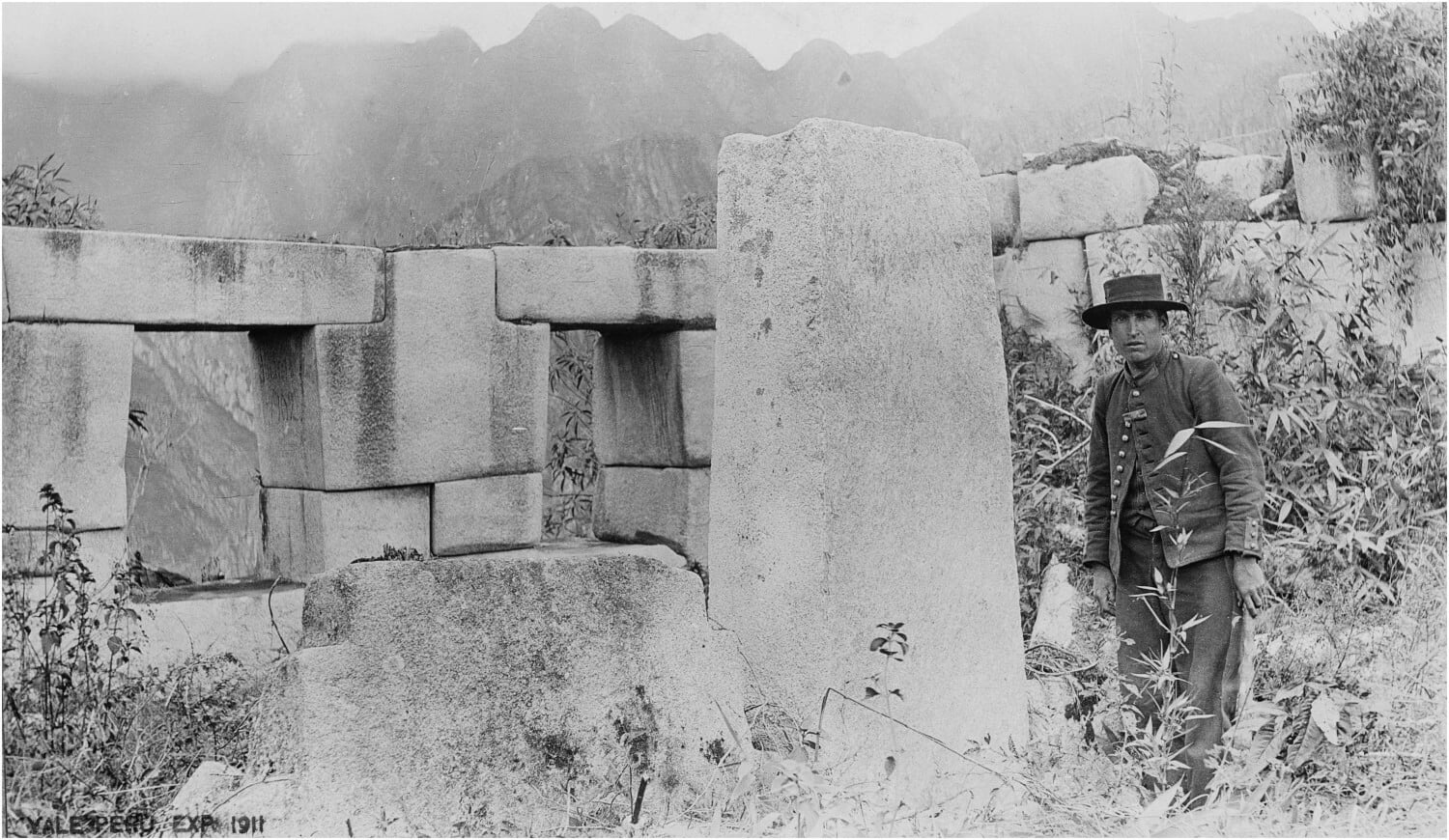
The ruins were not empty. Two families lived on the ridge, in a hut with a grass roof and a bench outside it, and they had been there four years. They had burned the forest off a few of the ancient stone terraces and planted maize, sweet potatoes, sugar cane, beans and peppers. They spoke Quechua and no Spanish. They had chosen the place, they said, because it had good terraces to farm and almost nobody ever came up.
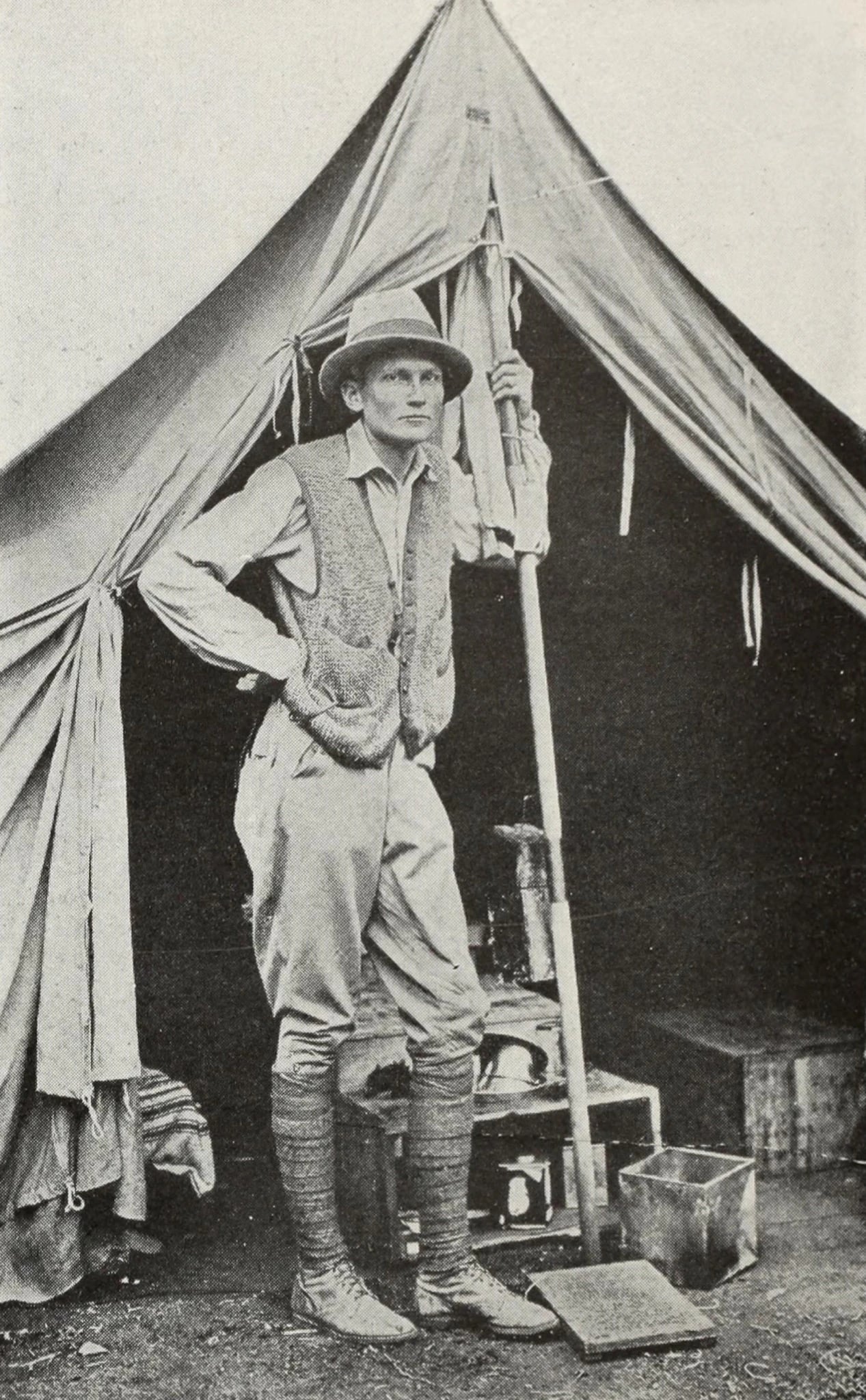
The man who arrived out of the gorge on the afternoon of 24 July 1911 was thirty-five, a lecturer in South American history at Yale, and the director of an expedition sent to find the last capital of the Inca. The families gave him a gourd of cold water and a plate of cooked sweet potatoes. When he said he wanted to see the rest of the ruins, they sent one of the children to show him the way.
His name was Hiram Bingham, and he is the reason the rest of the world knows about Machu Picchu. He is not the man who found it. The clearest statement of that survives in his own handwriting, in the diary he wrote up the following evening, and he never printed a word of it.
Even the picture most people have in their heads is the wrong year: the clean, grassy, empty ruin on the postcards was photographed more than a year later, after Bingham came back and had the forest cut down.
How Hiram Bingham got up to Machu Picchu
The night before, a farmer working the neighbouring plot had mentioned that there were ruins on the ridge above the camp. Nobody made much of it. There were ruins all over that valley, and Bingham's own account, published eleven years afterwards, is refreshingly free of destiny: “No one supposed that they would be particularly interesting.”
The morning came in cold drizzle. The farmer, Melchor Arteaga, did not want to climb anywhere in that weather, and said so. Bingham offered him a sol — three or four times the ordinary daily wage in the valley — and Arteaga agreed.
They left camp at ten o'clock: Bingham, Arteaga, and Sergeant Carrasco, a Peruvian gendarme the government had attached to the expedition. Three quarters of an hour upstream, Arteaga turned off the road and went down through the jungle to the Urubamba, where a bridge crossed the rapids at their narrowest point. It was made of half a dozen slender logs, some of them too short to span the gap, spliced and lashed together with vines. Arteaga and Carrasco took off their shoes and walked over. Bingham got down on his hands and knees and crawled across six inches at a time.
Then an hour and twenty minutes of climbing, a good part of it on all fours, up a slope where somebody had propped rough tree-trunk ladders over the worst of the rock. It was hot, and Arteaga mentioned the snakes. Shortly after noon they reached the hut, where the two farmers — Richarte and Álvarez — fed them and sat them down in front of a view: green precipices dropping some fifteen hundred feet to the white water of the river, a granite cliff standing two thousand feet sheer on the far side, and, away to the left, the solitary sugarloaf of Huayna Picchu.
Through Carrasco, Bingham was told there were more ruins a little farther along the ridge. He was in no hurry. It was the kind of claim he had learned to discount.
What Bingham walked into on 24 July 1911
Arteaga decided to stay behind and gossip, so the farmers sent a small boy along as a guide instead — by most accounts Richarte's eleven-year-old son, Pablito. The boy went first.
Round a slight promontory the ground changed. There was a flight of terraces two hundred yards long and ten feet high, cut into the mountainside, which the families had cleared that season: a stand of large trees chopped down and burned over to make room for maize. Bingham crossed the burnt ground, walked into the untouched forest beyond it, and, in his own words, “suddenly found myself in a maze of beautiful granite houses!”
They were smothered — “covered with trees and moss and the growth of centuries”, hidden in bamboo thickets and hanging vines — but under the moss the walls were white granite ashlar, cut and fitted with a precision he had never seen anywhere. The boy took him to a cave lined with the finest cut stone, and to a semicircular wall keyed to the curve of the boulder it stands on, which Bingham thought the work of a master artist. He was right. It is now called the Temple of the Sun.
He took photographs, made notes, and went back down. He had been on the ridge about five hours.
Why nobody outside the valley knew about Machu Picchu
A stone town fifty miles from Cusco went unrecorded for four centuries, which sounds impossible until you look at what the expedition's own cameras saw that year.
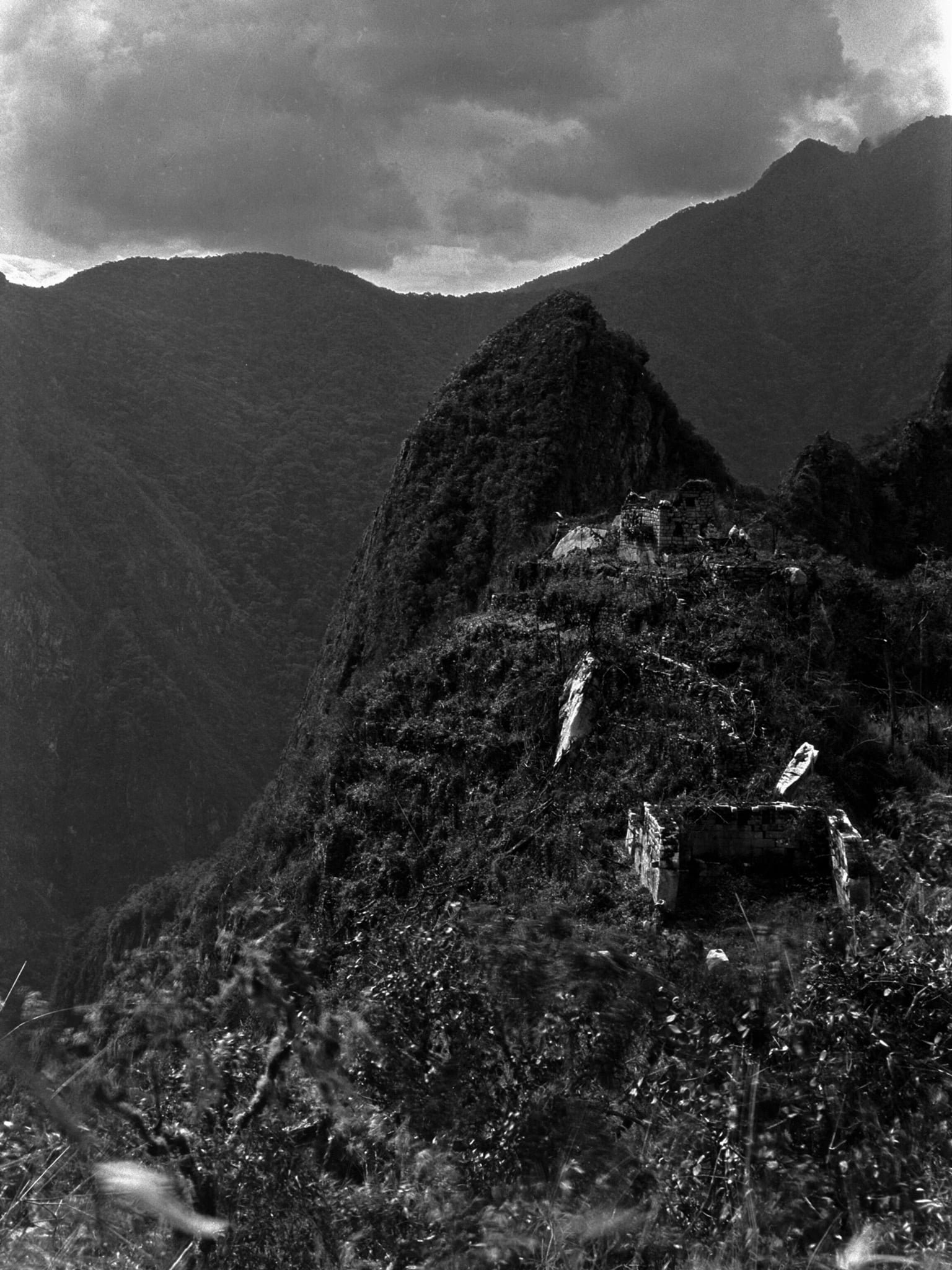
The buildings sit under canopy and the terraces read as contour lines in scrub. The ridge stands at 2,430 metres — high, but well below the cold country around Cusco, in a belt of cloud forest that closes over anything left alone. The site had no silver, no strategic value to the Spanish, and no population to convert.
The colonial administration was not wholly ignorant of the place. The name Picchu turns up in at least three sixteenth-century documents, and the archaeologist John Rowe used them to show that this stretch of the Urubamba had belonged to Pachacuti. Nobody thought it worth the climb.
Nor was Bingham the first outsider to hear the name. In 1875 the explorer Charles Wiener was told at Ollantaytambo about ruins at “Huaina-Picchu” and “Matcho-Picchu”. He could not get to them, but he marked them on a map published in Paris in 1880.
Who reached Machu Picchu before Hiram Bingham
Nine years earlier, on 14 July 1902, a farmer from near Cusco named Agustín Lizárraga came up the same ridge with three companions and wrote his name and the year in charcoal on a wall of the Temple of the Three Windows.
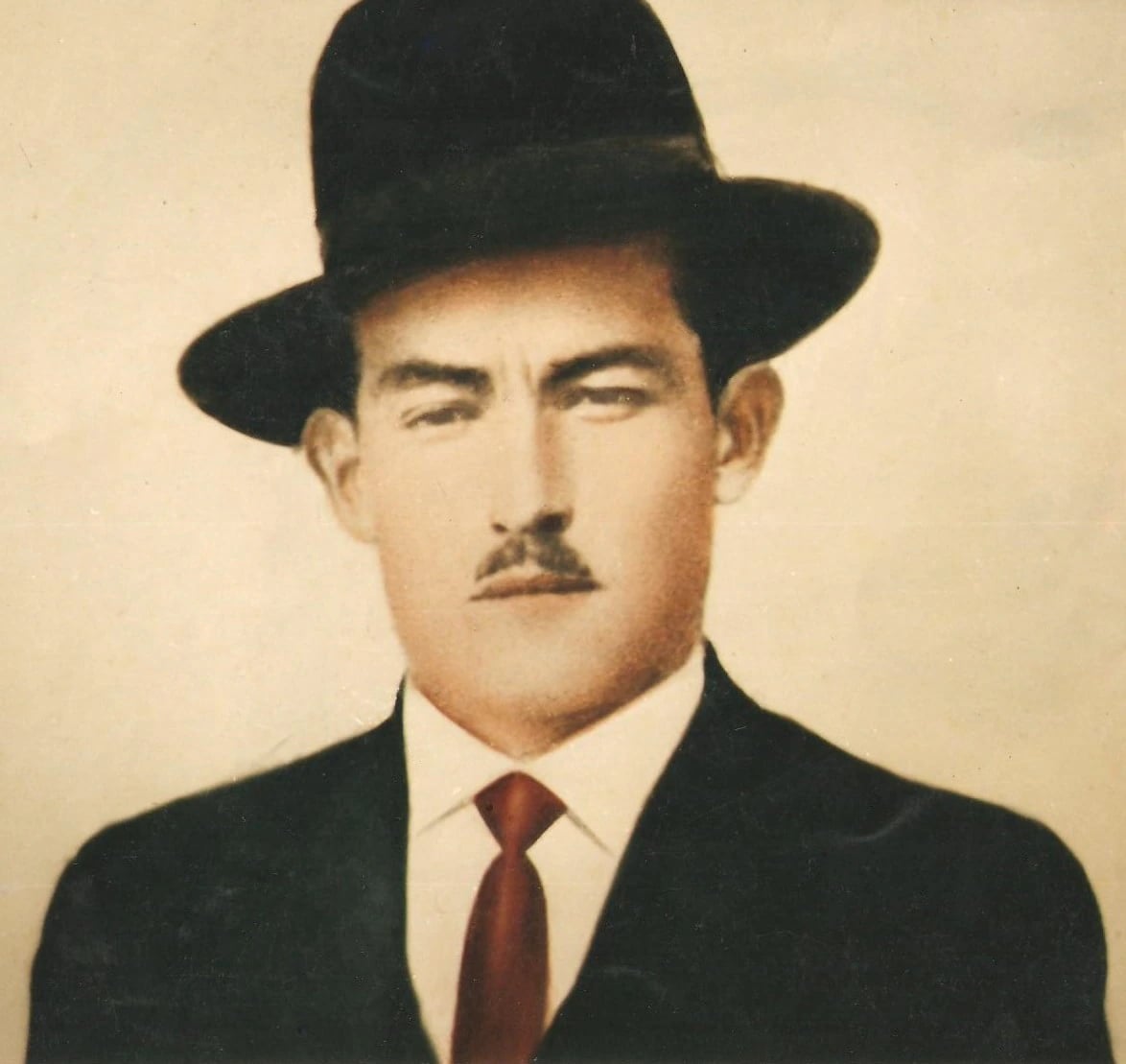
Bingham saw that inscription in 1911, and wrote down what he made of it in his diary the next day.
Agustín Lizárraga is the discoverer of Machu Picchu.
Hiram Bingham, diary entry, 25 July 1911
The sentence appears in nothing he published. In later years he had the charcoal cleaned off the wall, for preservation. Lizárraga himself drowned in the Urubamba on 11 February 1912, crossing a footbridge to his maize field; his body was never recovered.
So the honest description of 24 July 1911 is not that a lost city was found. Two families were farming its terraces, a boy who lived there walked in front the whole way, and another man's name was already on the temple. What Bingham did was arrive with a camera, a university behind him and a magazine willing to print him, and make a place that local people had never lost known to everybody else.
What Machu Picchu actually was
He was wrong about the ruins as well. He had come to Peru looking for Vilcabamba, the forest refuge where the last Inca rulers held out for forty years after the Spanish took Cusco in 1533, until the town fell in 1572 and Túpac Amaru was executed in the square at Cusco. Bingham decided Machu Picchu was Vilcabamba, and later that it was also Tampu Tocco, the legendary birthplace of the dynasty. It is neither. The real Vilcabamba was Espíritu Pampa, deeper in the forest — which Bingham reached himself in 1911 without recognising it, and which was identified only in 1964, by Gene Savoy.
What the place actually was is now reasonably clear: a royal estate, built around 1450 for Pachacuti, the ruler who turned a hill kingdom into the largest empire the Americas ever produced. A country house on an extraordinary scale, run by a permanent staff and visited by the court.
Two modern studies have sharpened that picture, using the bones Bingham's second expedition dug up. In 2021 a team led by the Yale archaeologist Richard Burger radiocarbon-dated 26 individuals from the cemeteries and put the occupation between about 1420 and 1530 — at least twenty years earlier than the Spanish chronicles allow, which drags Pachacuti's career backwards with it. In 2023 a genomic study of 34 burials found retainers drawn from all over the empire, and some from Amazonia: a household assembled from a continent.
How Machu Picchu became famous
Bingham came back in 1912 with money from Yale and the National Geographic Society, and had the site cleared.
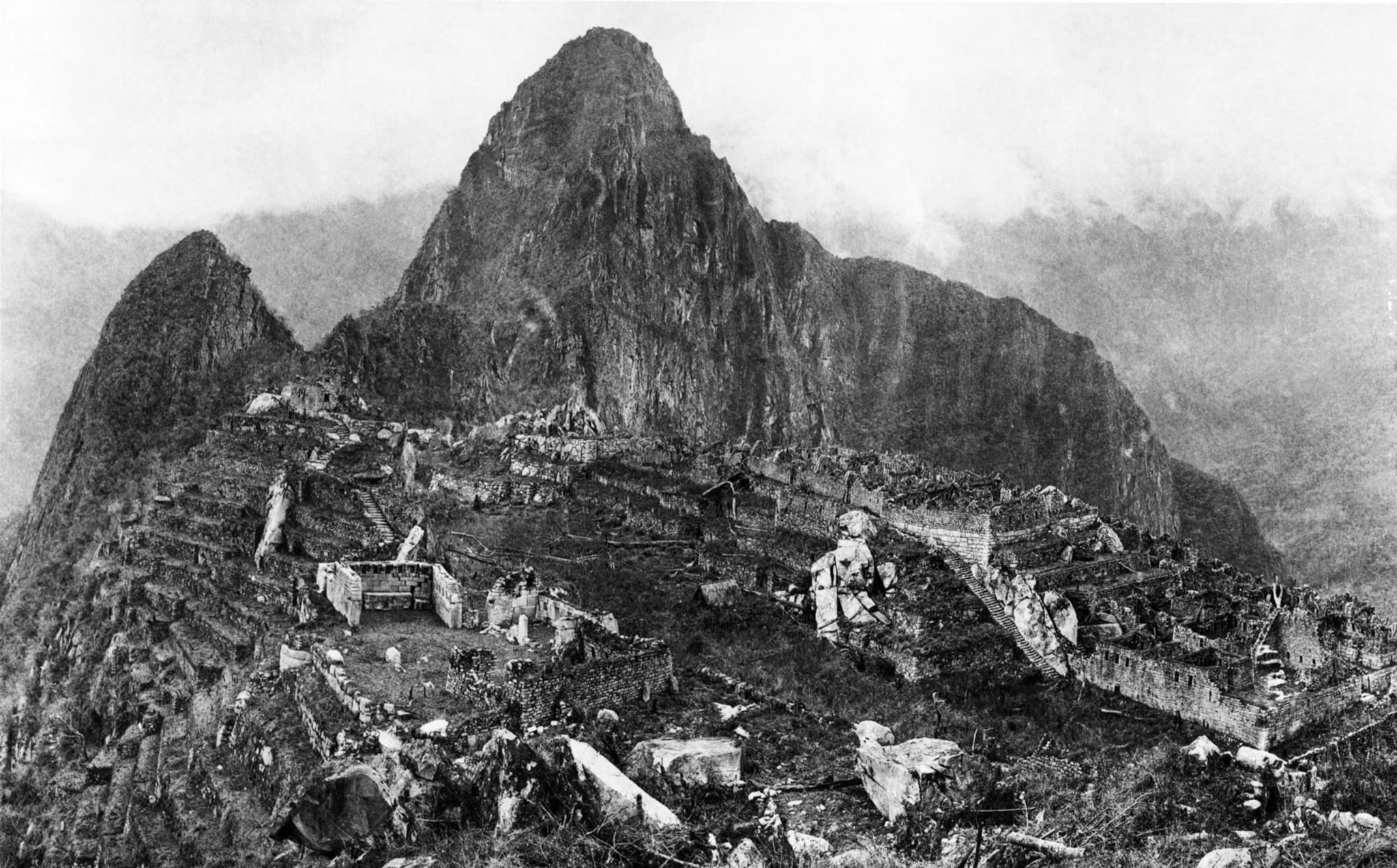
In April 1913 National Geographic gave over its entire issue to the expedition — some 250 photographs and a fold-out panorama — and Machu Picchu became, more or less overnight, one of the best-known places on earth. Bingham wrote the popular books and went into politics, ending as lieutenant governor of Connecticut, governor for a single day, and a United States senator.
The thousands of objects and human remains his expeditions shipped to New Haven took longer to settle. Peru maintained for most of a century that they had been lent rather than given. After a federal lawsuit and a good deal of diplomacy, Yale and Peru agreed terms in November 2010, and the collection went home to Cusco through 2011 and 2012. It is on show at the Casa Concha, a few hundred metres from the square where the last Inca was executed.
Machu Picchu was inscribed on the UNESCO World Heritage list in 1983, as both a cultural and a natural site. More than a million people visit every year, arriving by train and bus at a ridge that in 1911 cost a sol, a log bridge and an hour and twenty minutes on all fours.
Sources
- Hiram Bingham, Inca Land: Explorations in the Highlands of Peru (1922) — Project Gutenberg — Chapter XVII is Bingham's own dated account of 24 July 1911, and the source of every quotation here: the drizzle, the sol, the log bridge, the sweet potatoes, the small boy, and the maze of granite houses.
- Hiram Bingham, In the Wonderland of Peru, National Geographic, April 1913 — Internet Archive — The whole issue given over to the 1912 expedition, with the photographs that made the site famous — and the 1911 comparison plates showing the ridge before any clearing.
- Machu Picchu — Wikipedia — Coordinates and elevation, the arrival narrative and the identification of the boy as Richarte's son Pablito, and the 1983 World Heritage inscription.
- Hiram Bingham III — Wikipedia — The 1911 expedition and its object, the later returns, and the political career.
- Agustín Lizárraga — Wikipedia — The visit of 14 July 1902, the charcoal inscription, Bingham's diary entry of 25 July 1911, the later removal of the signature, and Lizárraga's death in the Urubamba.
- Charles Wiener — Wikipedia — The 1875 report of ruins at Huaina-Picchu and Matcho-Picchu, and the map published in Paris in 1880.
- Vilcabamba, Peru — Wikipedia — The Neo-Inca state, its fall in 1572, and Gene Savoy's identification of Espíritu Pampa in 1964.
- Antti Korpisaari, “Machu Picchu”, Encyclopédie des historiographies, Presses de l'Inalco (2020) — The royal-estate reading, and John Rowe's demonstration that the sixteenth-century documents naming Picchu place this stretch of the valley in Pachacuti's hands.
- Yale News — “Machu Picchu older than expected, study reveals” (2021) — Richard Burger's AMS radiocarbon dating of 26 individuals to about 1420–1530.
- Richard Burger et al., “New AMS dates for Machu Picchu”, Antiquity (2021) — The paper itself.
- Tulane University — “Ancient DNA reveals diverse community in the Lost City of the Incas” (2023) — The 34 genomes published in Science Advances, and retainers drawn from across the empire and from Amazonia.
- Art-Law Centre, University of Geneva — case note, Machu Picchu Collection: Peru and Yale University — The export permits, the lawsuit, and the settlement of November 2010.
- Yale News — Yale and UNSAAC create a centre for the study of Machu Picchu (2011) — The return of the collection to Cusco in stages, and the Casa Concha.
- National Geographic — “Finding Machu Picchu: A Look at Explorer Hiram Bingham” — Bingham's method, the Kodak he carried, and how much of the finding was done by local guides.


