A Timeslip story
The all-female gang that raided London's department stores by the carload
They left South London before nine in the morning in a fleet of big saloon cars, and by lunchtime they were working Gamages, Selfridges, Harrods and Whiteleys at the same time. The police put the number of cars at at least fourteen. Every one of the thieves was a woman.


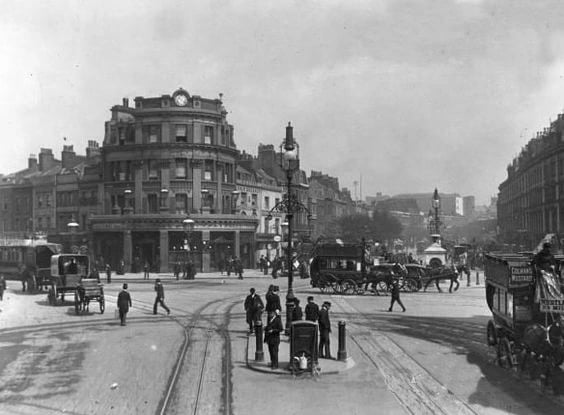
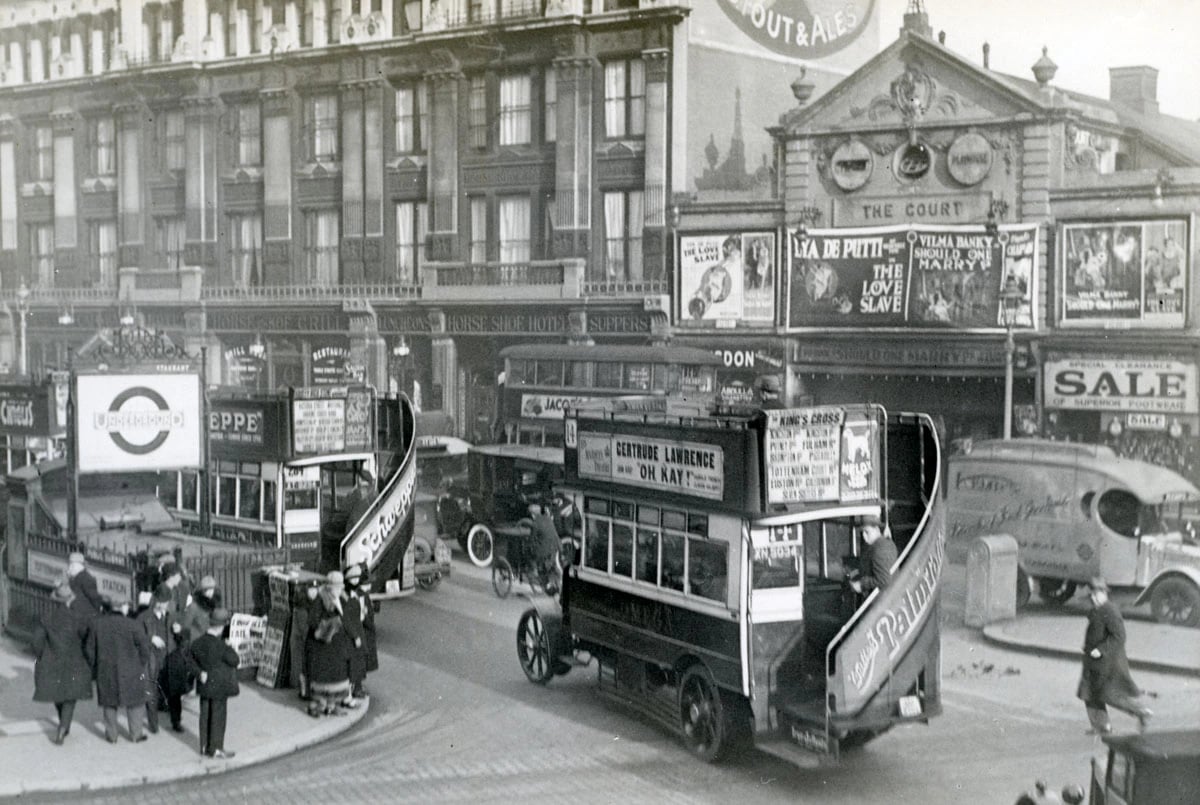
The Elephant and Castle is where half a dozen South London roads run into one another, a mile south of the Thames. On a raw, foggy Friday morning two days before Christmas 1927, a line of large motor cars drew up along the kerb outside the great Victorian public house on the corner, and women in good fur coats came out of the lit doorway and got into them. Within the hour they were over the river and spread across the West End.
Gamages in Holborn, which called itself The People's Popular Emporium and sold furniture, sports kit, toys and — genuinely — live chimpanzees. Selfridges and the rest of Oxford Street. Debenham and Freebody on Wigmore Street. Harrods in Knightsbridge. Whiteleys out in Bayswater. Two days before Christmas the counters were piled high and the floors were packed, and that was the whole point.
The women were the Forty Elephants, an all-female shoplifting syndicate that had worked out of the Elephant and Castle, in one form or another, for the better part of a century. That morning is the largest single day's work anyone has recorded of them, and it is known because Brian McDonald reconstructed the gang from birth records, marriage indexes and out-of-print books. No contemporary press account of the raid is online.
Who were the Forty Elephants?
They were an organised shoplifting operation staffed entirely by women, and by the 1920s the largest in Britain. The name was first printed in a newspaper in 1873, though police records suggest something like the gang had existed since the late 1700s. Where it came from is genuinely uncertain — the likeliest account has Ali Baba and the Forty Thieves bent towards “Elephants” by the district, and they answered to Forty Thieves just as readily.
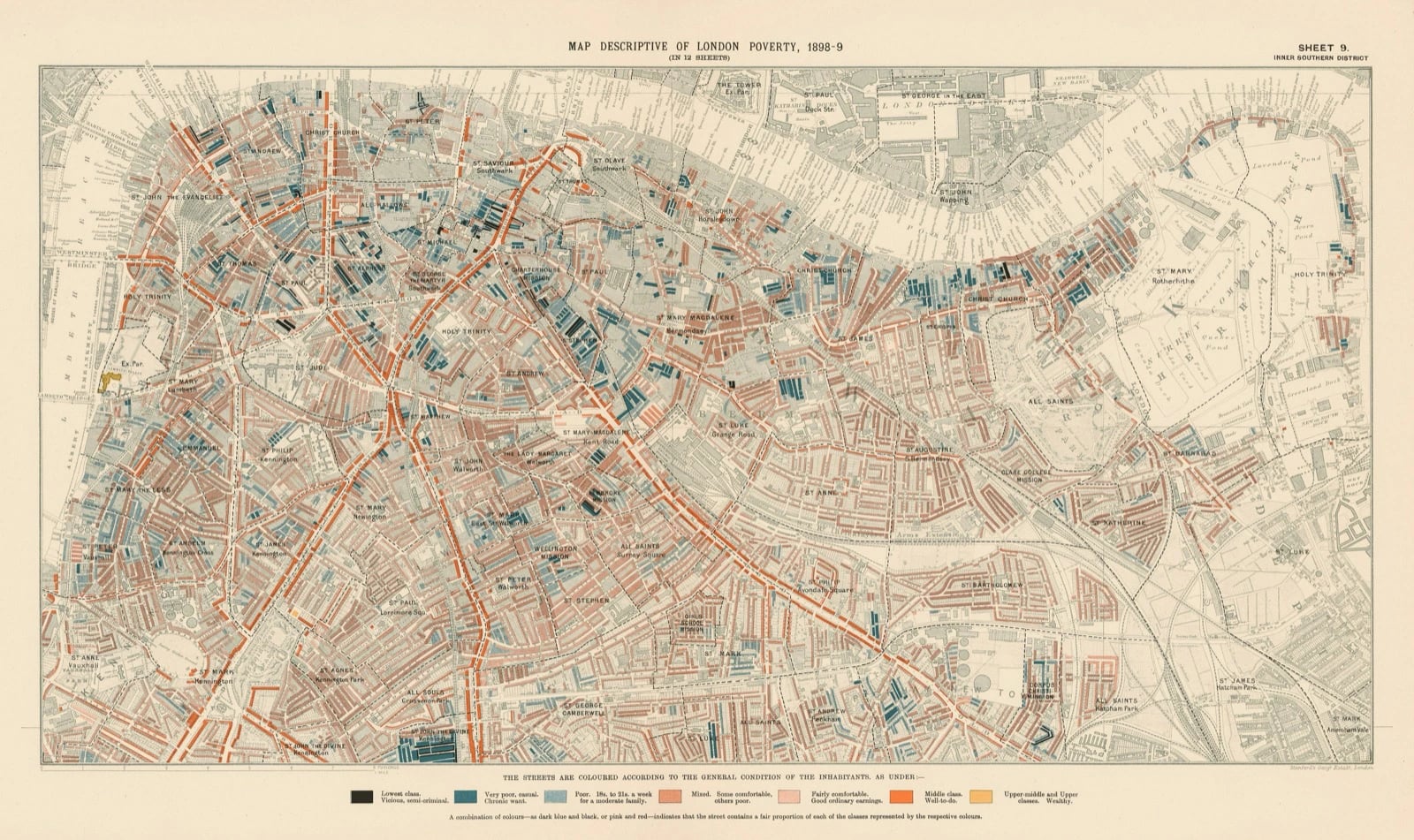
They worked alongside — never under — the male Elephant and Castle gang, a looser army of burglars and receivers. Their district was not the place the West End imagined: when Charles Booth's investigators mapped London's poverty in 1898 and 1899 they shaded these streets among the poorest in the city and filed the inhabitants under “the lowest class” and “vicious, semi-criminal”. Yet the Elephant was also the Piccadilly of South London — theatres, a variety palace with Marie Lloyd and a young Charlie Chaplin on its bills, electric trams from 1903.
What made the gang formidable was not violence but organisation. It ran as a set of small cells, any of which could be pointed at one shop or, on a day like 23 December, at a dozen at once, and it was territorial: shoplifters working streets the Forty Elephants considered theirs paid a percentage or took a beating. It had a disposal chain — traders, pawnbrokers, shops willing to swap the labels — so stolen stock became cash within hours. And it had sidelines: false references to get hired as a housemaid and then strip the house, and blackmail, which required only that a wealthy man be seduced first.
Why Selfridges made the Forty Elephants possible
None of it would have worked a generation earlier, when the goods were behind the counter and an assistant fetched them for you.
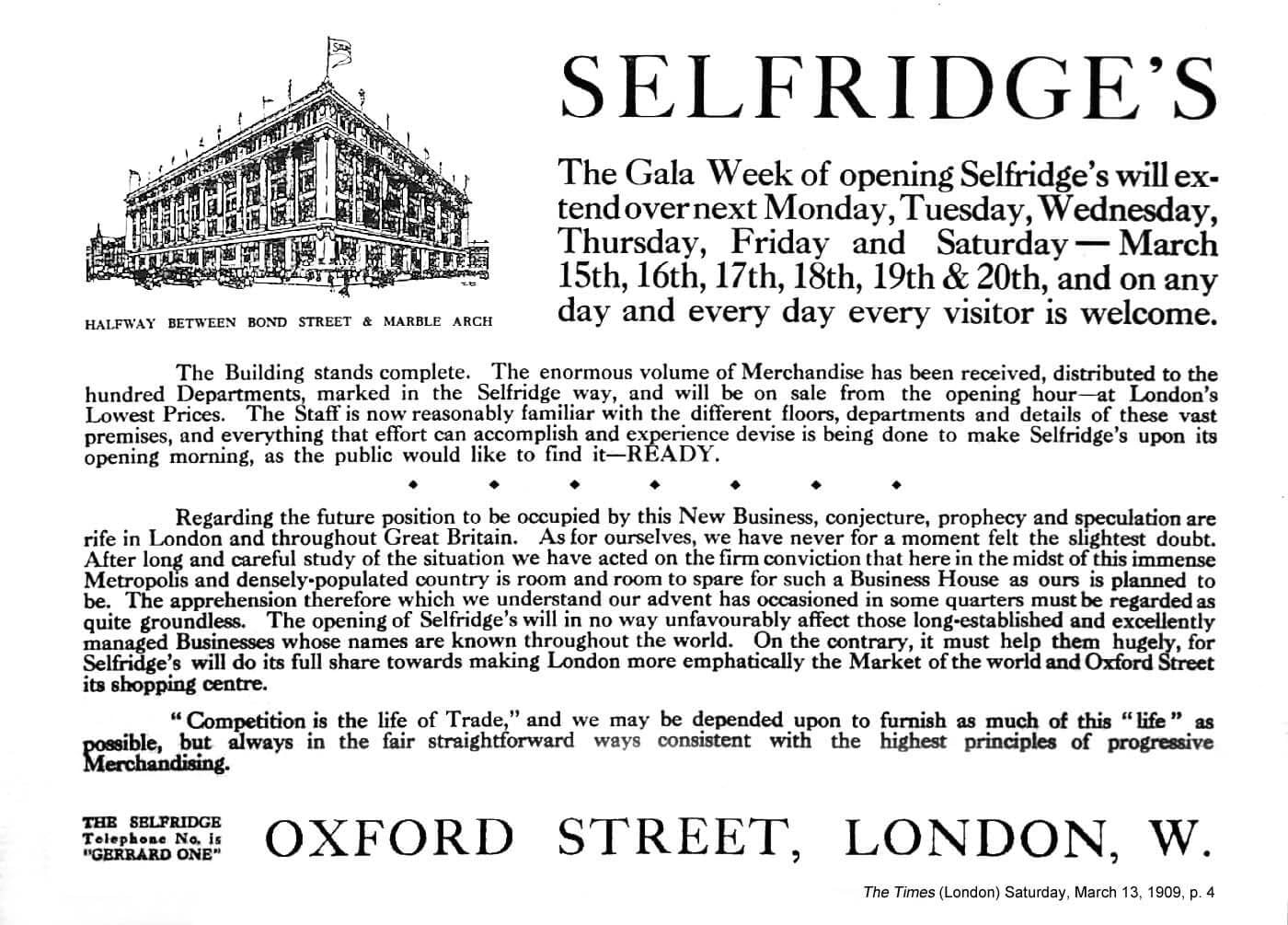
The change has a date and a name. On 15 March 1909 an American named Harry Gordon Selfridge opened a vast store on Oxford Street, and a bugle sounded at nine o'clock to unlock the doors. Ninety thousand people came through on the first day and a million in the first week. His innovation was psychological rather than architectural: the merchandise came out from behind the counter onto open tables where anybody could handle it, and you were welcome to look without buying anything at all.
The gang took the invitation at face value, and had the other half of Edwardian retail etiquette working for them besides: a shop assistant could not search a respectable-looking woman, and would not have dared. As McDonald put it, they benefited from the prudish attitudes of the time by taking shelter behind the privacy afforded to women in large stores.
How the Forty Elephants actually stole
They dressed for it. Coats, cummerbunds, muffs, skirts, bloomers and hats were tailored with hidden pockets, hooks and netting, so a fur coat or a folded bolt of silk could go into a skirt through a slit and vanish. They worked in pairs, one lifting and one watching, rolling a garment up off the hanger from the bottom behind an innocent item held in front of the hands doing the work. One member is remembered for stuffing a cushion under her skirt and staging the collapse of a pregnant woman while the counter emptied behind her.
The scale was industrial. In 1923 Maggie Hughes was jailed for three years after running out of a jeweller's with a tray of thirty-four diamond rings and straight into a policeman. One West End store reckoned it lost £7,000 of stock in a single year — more than half a million pounds today, from one shop.
Who was Alice Diamond, the “Queen of the Forty Thieves”?
The gang's queens were not elected and did not inherit; the title went to whoever the others would follow. From about 1915 that was Alice Diamond, born in 1896 in the Lambeth workhouse infirmary and known to police and press as Diamond Annie.
She was tall for her time. The Habitual Criminal Register has her at five foot ten and a half, and the newspapers, which could not decide whether she was a monster or a film star, promoted her to “the tallest woman criminal in London” and the “six-foot Queen of the Forty Thieves”. She wore diamond rings, and the police explanation for the nickname was that they made her fists worth avoiding. Her real asset was administrative: she ran the gang as cells and worked several stores at once, which is the shape of what happened two days before Christmas 1927.
Her chief lieutenant, Maggie Hughes — Maggie Hill in some records — was her physical opposite at four foot ten and a half, and one paper called her “petite, demure”. A judge at the Old Bailey once told her she looked like a baby. She had also gone at rival women with open razors and broken bottles, and one of them lost an eye.
Why the gang drove big American cars
In the 1920s a private motor car was an upper-middle-class object, and a woman driving one was an affront to a good many people. The Forty Elephants had a fleet. They were said to favour big American Chryslers — fast enough to leave a police car behind, and reportedly fitted with speaking tubes to the driver and telescopes for spotting the Flying Squad.
In those days riding in a Chrysler was like going out in a Mercedes. Generally people were still going around in horses and carts.
Shirley Pitts, who joined the gang as a child and became a legend of the trade herself
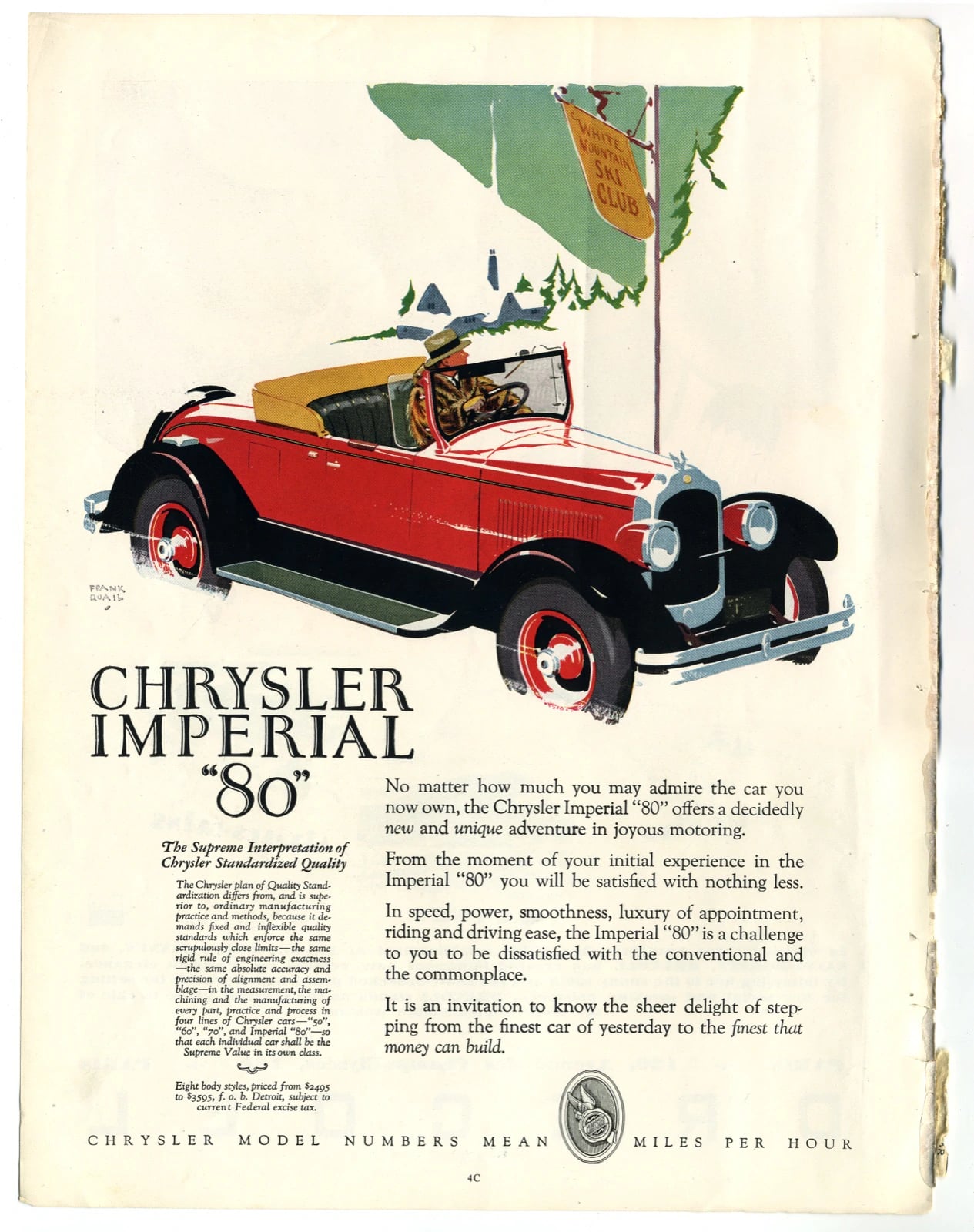
The cars also solved the evidence problem. Goods came out of the store straight into a waiting vehicle, usually driven by one of the Elephant men, so a woman stopped in the street afterwards was clean. Out of town they used the railways the same way, leaving empty suitcases in station cloakrooms in the morning and collecting full ones at night.
The Battle of Lambeth, and what became of the gang
A great many retellings have the gang destroyed two years before this morning, in a brawl that has come to be called the Battle of Lambeth. They are wrong, and the mistake is everywhere.
What happened was that Alice Diamond required her women to get her permission before they married, on the reasonable ground that a husband would learn things. In December 1925 one of them, Marie Britten — Marie Jackson after the wedding — married without it, and Diamond and Maggie Hughes led a crowd of thirty or forty to the family's house in Johanna Street, Lambeth. Windows went in, the door was forced, and the men in the party carried razors. Nine stood trial at the Old Bailey the following March, and Diamond went to Holloway with eighteen months' hard labour.
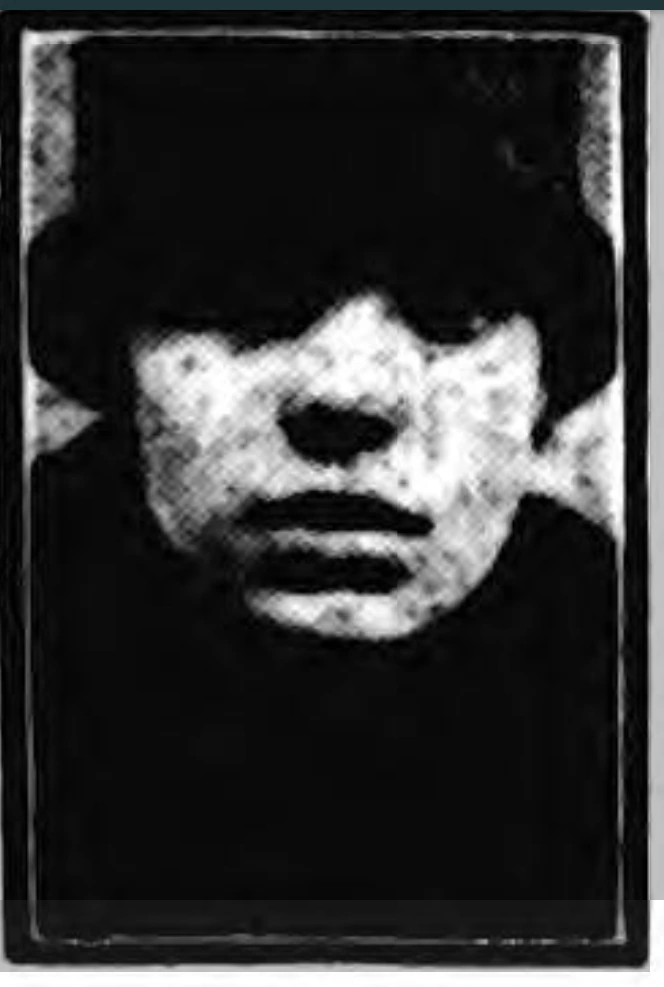
What it really produced was press. The trial ran in March 1926 — it is why the one known photograph of Alice Diamond exists — and the coverage, “Underworld Amazon”, “Queen of the Terrors”, the “six-foot Queen of the Forty Thieves”, ran on through the year of the General Strike. Respectable Britain was, just then, extremely receptive to the idea that the working class was out of control, and a gang of women in furs and fast cars was exactly the shape that fear wanted.
The gang carried on. Diamond led into the 1930s before handing over to Maggie Hill, and the Forty Elephants were still trading after the Second World War. Hill was jailed for four years in 1939 for blinding a policeman with a hatpin. Alice Diamond died in 1952, and more than seventy direct members have since been identified.
As for that week: two days after the cars went out, on Christmas night, the worst blizzard in a generation came up the Channel. Snow lay a foot deep across much of southern England and two feet in Kent, and the stores the gang had just worked spent the holiday cut off. The same snow had fallen on the Cotswolds, where the Thames rises, and when it thawed over the New Year the river came over the Embankment and drowned fourteen people in central London on 7 January 1928. The junction outlasted them all: the public house on the corner came down in 1959, and the Elephant and Castle became a roundabout, then a building site, and is now something else again.
Sources
- The Forty Elephants: South London's supreme shoplifters — London Museum — the December 1927 raid, the Booth survey of the district, the tailored garments and the faked pregnancy
- A Thousand Blows and the criminal girl gang that terrorised 1920s London — Tom Fordy, The Telegraph — the date, the police estimate of fourteen cars, the store list and the £7,000 figure
- Girl gang's grip on London underworld revealed — Amelia Hill, The Guardian, 27 December 2010 — Brian McDonald's research: the 1873 first mention, the cells, the fences, the suitcases and the sidelines
- Emily Jane Burgess, The Dissemination of Female Gangsterism into the Popular Consciousness, 1890–1940 (PhD thesis, University of Portsmouth) — the fullest scholarly treatment: the Battle of Lambeth in detail, Diamond's and Hughes's Habitual Criminal Register entries, the Chryslers, and the press mythmaking
- Forty Elephants — Wikipedia — the succession to Maggie Hill, and the correction of the “collapsed in 1925” myth
- The Queens of the Forties — Nick Thorne, TheGenealogist — the MEPO 6 Habitual Criminals Registers, Diamond's aliases and her Elephant and Castle address
- Alice Diamond and the Forty Elephants — Southwark News — the Walworth streets the gang came from, and its break with the male Elephant gang
- Selfridges: the store that shook up London shopping — London Museum — the 1909 opening, the crowds, and the open displays that changed what a shop was
- London's lost department stores — London Museum — Gamages, its slogan and its livestock; Debenham and Freebody; Whiteleys in Bayswater
- A brief history — Elephant and Castle — the trams, the theatres and the “Piccadilly of the South”
- Elephant and Castle — Wikipedia — the 1898 rebuilding of the public house and its demolition in 1959
- December weather in Britain — Trevor Harley — the Christmas 1927 blizzard, its timing and its depths
- 1928 Thames flood — Wikipedia — how the Christmas snow became the flood of 7 January 1928
- Brian McDonald, Alice Diamond and the Forty Elephants (Milo Books, 2015) — the book behind most of the modern accounts above, and the source of the 23 December 1927 raid


_p4.jpg)

.jpg)